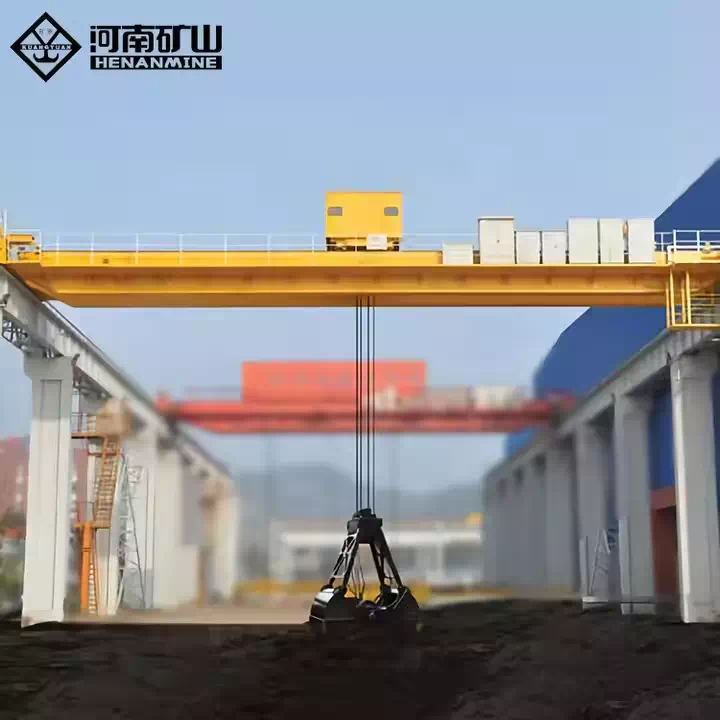
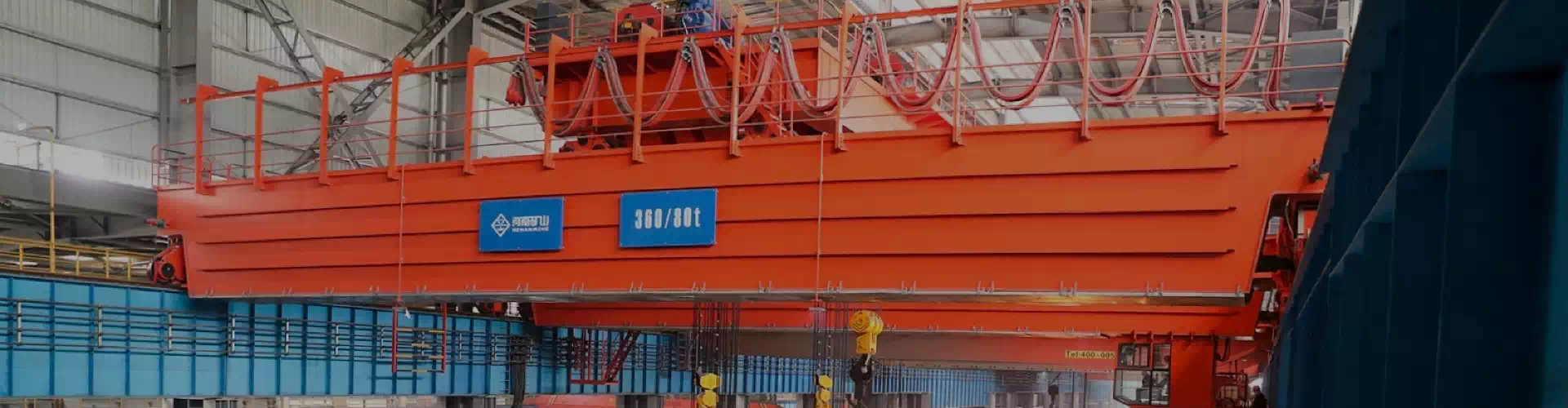
QZ Series Double Girder Overhead Crane with Grab


- A6
-

 Grab bucket
FEATURED PRODUCTS
-
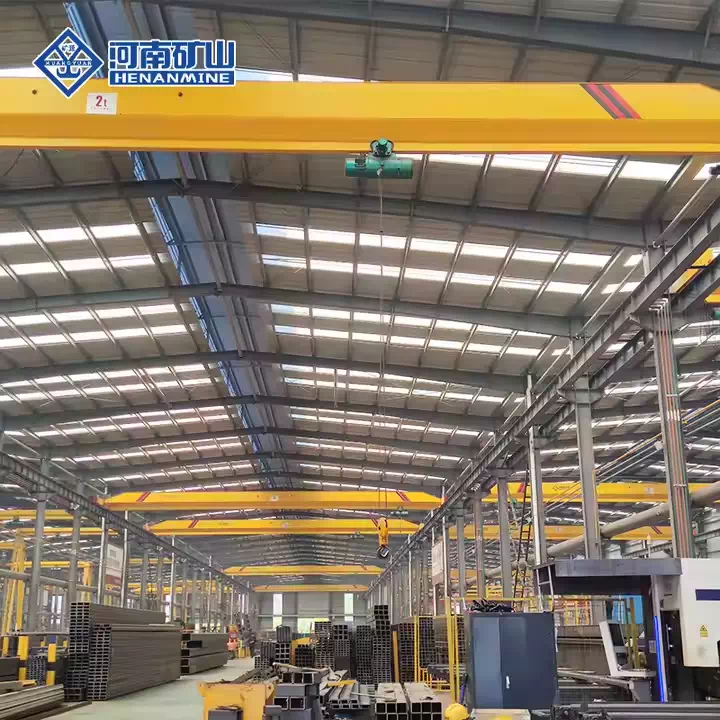 LDA Electric Single Girder Overhead CraneApply: This product is widely used in plants warehouses, material stocks to lift goods.LEARN MORE

-
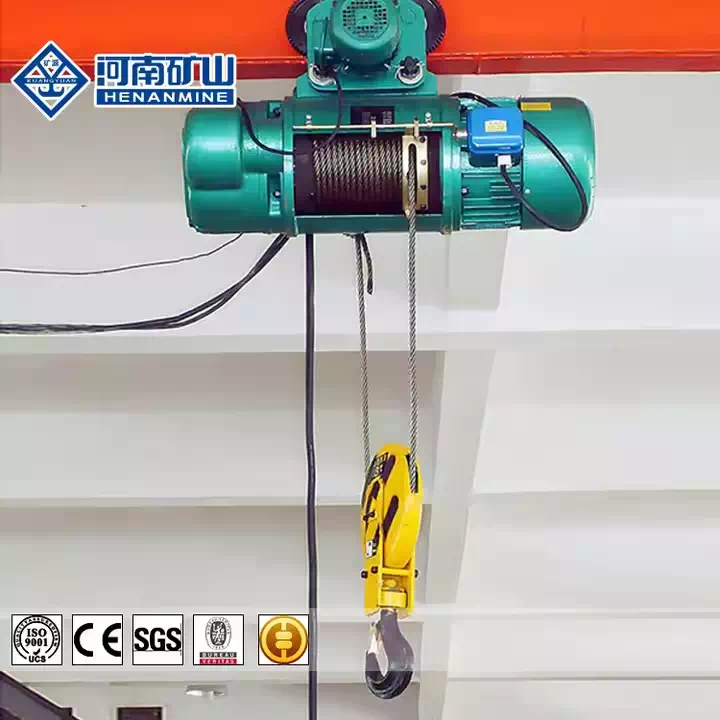 Metallurgical Electric HoistApply: Building Material Shops, Machinery Repair Shops, Manufacturing Plant, Farms, Construction works , Energy & Mining, Food & Beverage ShopsLEARN MORE
-
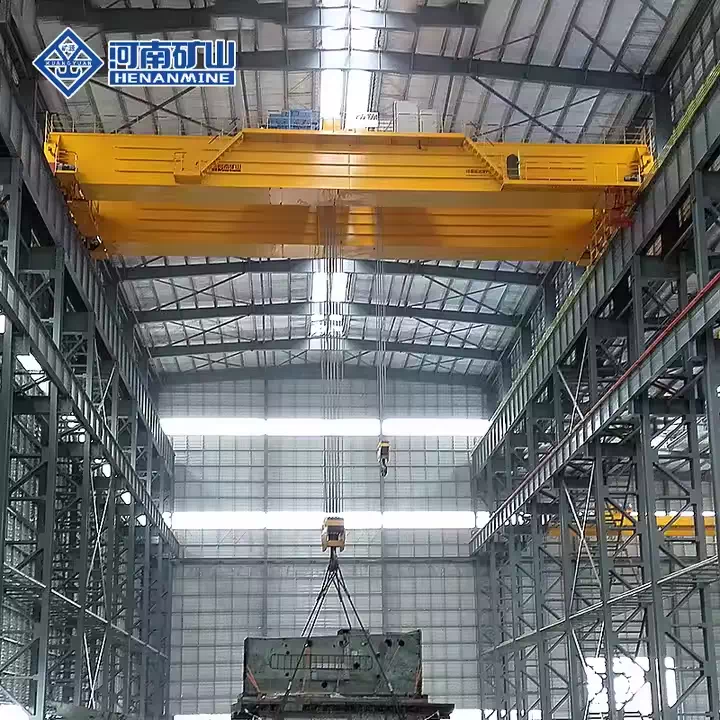 QD Type Double Girder Hook Overhead CraneApply: QD hook bridge crane is suitable to work in factories, warehouses and freight yards where the ambient temperature is-10oC-40oC and the relative humidity is not more than 85%.LEARN MORE
-
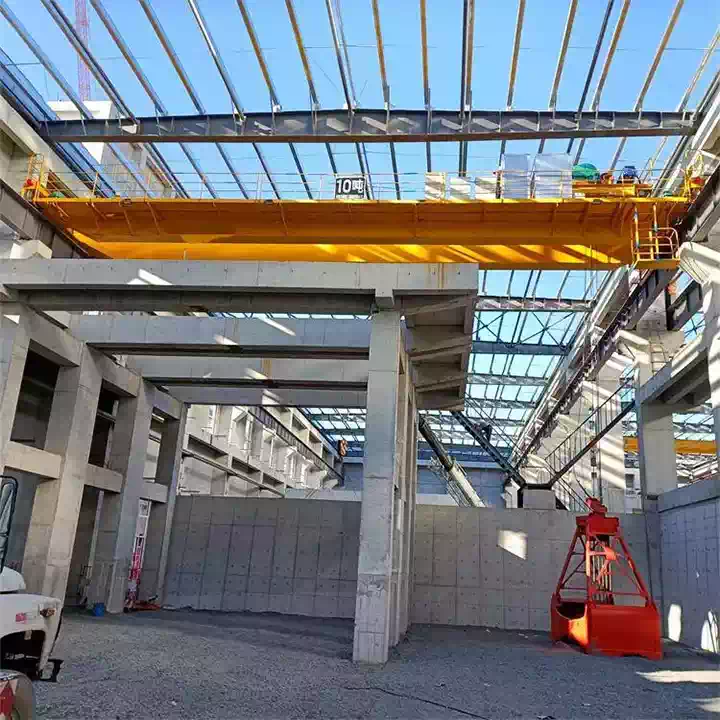 Double-Purpose Bridge Crane with Grab and HookApply: Grab crane bridge crane is widely used in ports, power plants, port, chemical industry, grasping all kinds of loose debrisLEARN MORE
The QZ Series Double Girder Overhead Crane with Grab manufactured by Mine Crane is not simply a conventional double girder overhead crane fitted with a grab bucket. Its main girder structure, grab hoisting mechanism, wire rope system, and other key components are designed to meet the specific requirements of bulk material grabbing, lifting, handling, and unloading operations.
Mine Crane provides grab crane solutions for different industries based on material characteristics and actual working conditions. To receive a suitable configuration and quotation, please provide information about the material type, target grabbing weight, crane span, and working environment.
Design and Key Features
Main Girder and Overall Structure
A double girder overhead crane with grab is designed for frequent material grabbing, lifting, transferring, and unloading cycles. Its handling equipment, hoisting mechanism, and working cycle differ from those of a conventional hook-type overhead crane. Therefore, the overall crane structure needs to be designed according to the grab weight, material load, and actual operating frequency.
Main Girder
Mine Crane designs the main girder according to the rated lifting capacity, span, and working class. The girder cross-section, plate specifications, and welding processes are selected accordingly to meet the required load-bearing capacity and stiffness under rated loads while controlling girder deflection.
Trolley Frame
The trolley frame of a grab crane supports the hoisting mechanism and the grab opening and closing mechanism. Mine Crane designs the trolley frame structure and connecting components according to the installation positions, equipment weights, and working loads of these mechanisms. This provides sufficient load-bearing capacity for frequent grabbing, lifting, and unloading operations.
Overall Structural Design
The overall crane structure is designed according to the rated lifting capacity, span, and working class. The load-bearing capacity and structural coordination of the main girder, end carriages, trolley frame, and hoisting mechanism are considered together to ensure that the main components meet the requirements of continuous bulk material handling operations.
Grab Hoisting Mechanism
The grab hoisting mechanism controls the lifting and lowering of the grab bucket and works together with the grab to complete material grabbing, transferring, and unloading operations.
Mine Crane selects and matches the drive power, lifting speed, and braking devices of the hoisting mechanism according to the rated lifting capacity, grab weight, lifting height, and actual operating requirements. This helps the mechanism meet the demands of frequent grab crane operating cycles.
Wire Rope and Drum System
The wire rope specifications, construction, and safety factor are selected according to the grab weight, rated lifting capacity, working class, reeving arrangement, and lifting height. These factors help ensure that the wire rope can withstand operating loads and repeated bending during lifting and lowering cycles.
The drum diameter, rope groove dimensions, and rope capacity are matched to the wire rope specifications and lifting travel. This allows the wire rope to wind and unwind along the drum grooves in an orderly manner, reducing rope tangling, jamming, displacement, and abnormal wear.
Braking and Control System
The control system manages the crane's operating movements, including lowering, grabbing, lifting, and unloading. According to the grab and hoisting mechanism configuration, the control system can coordinate the corresponding operating actions and incorporate suitable interlocking functions to reduce the risks of incorrect operation, operational conflicts, and other potential hazards.
The braking system works together with the control system to control the deceleration and stopping of the crane mechanisms. Safety devices such as travel limit switches and overload protection can also be provided. When abnormal conditions such as excessive travel or overloading occur, the corresponding protection functions are activated according to the equipment's control design.
Grab Types and Selection Guide
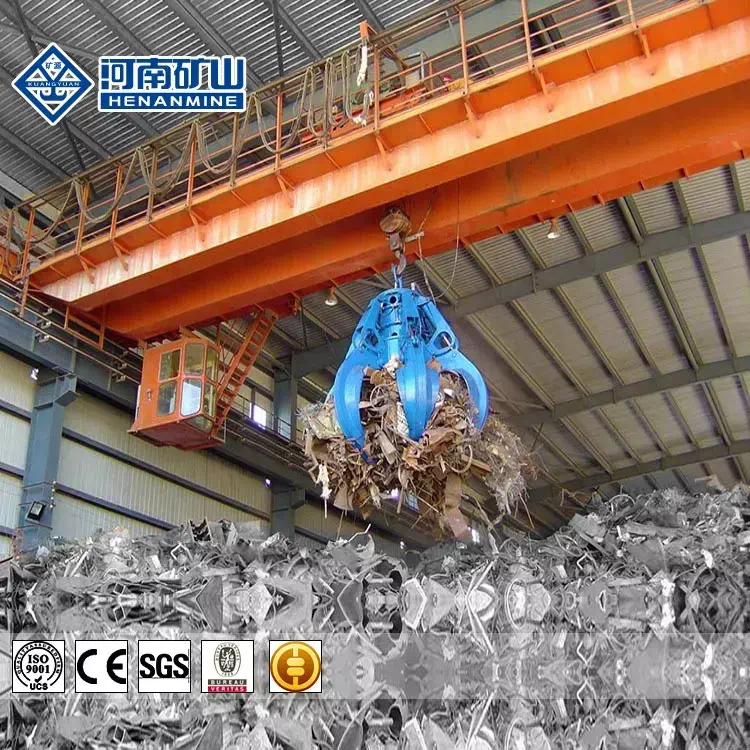
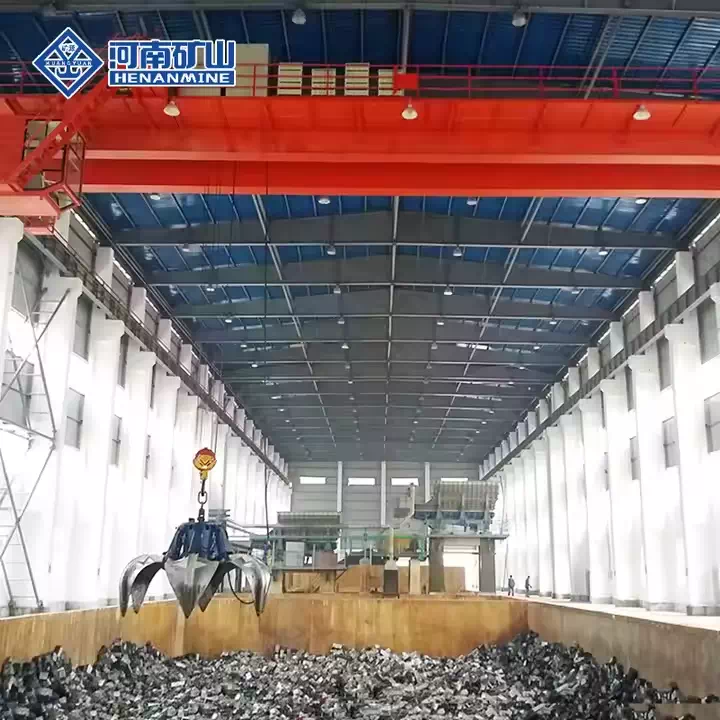
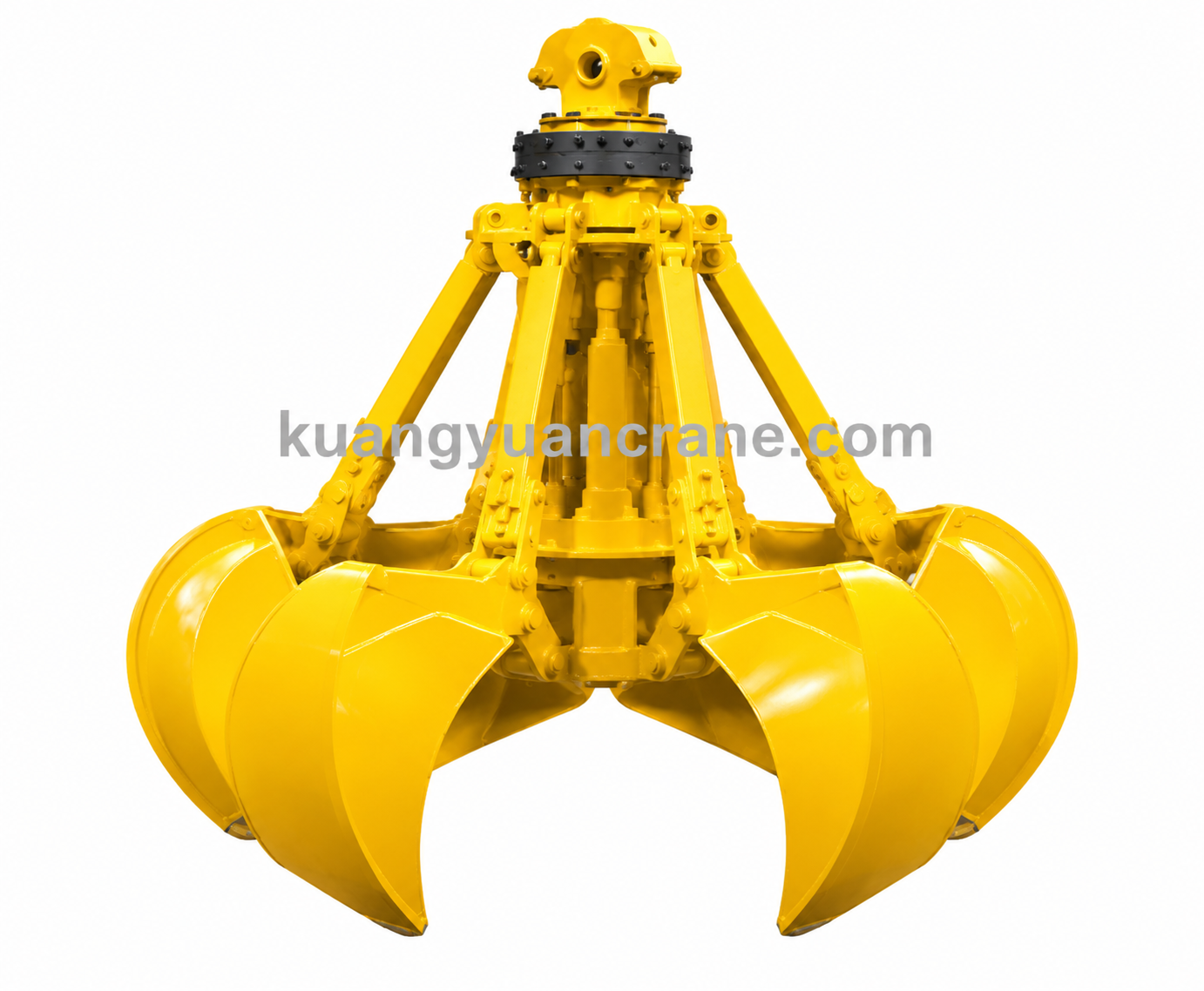
Orange Peel Grab
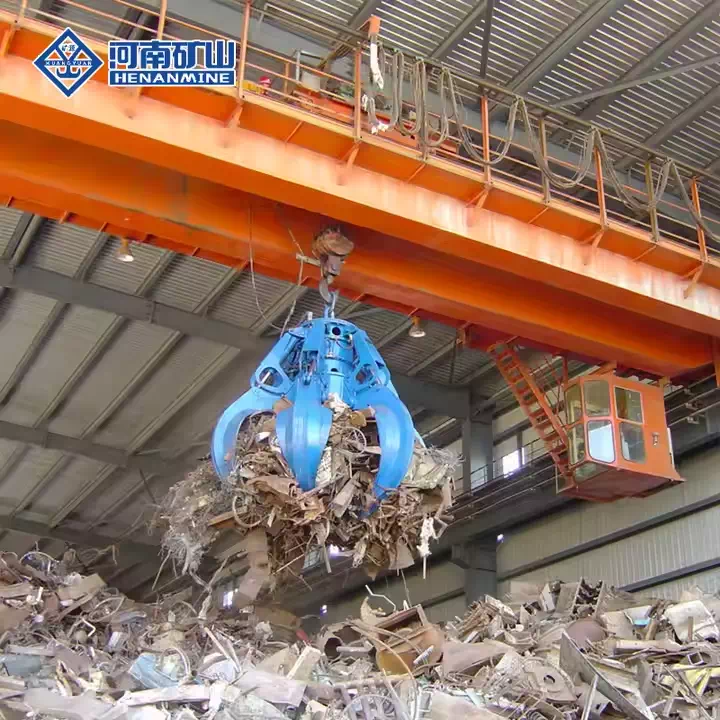
An orange peel grab consists of multiple curved jaws that close around materials from different directions. It is suitable for handling irregularly shaped, unevenly sized, or loosely piled materials, such as scrap steel, scrap metal, steel slag, large pieces of rock, and construction waste.
When selecting an orange peel grab, the material size, shape, piling condition, and target grabbing weight should be considered. For large or irregularly shaped materials, particular attention should be paid to the grab opening size and jaw structure. For sharp or highly abrasive materials, reinforced jaw edges or wear-resistant materials can be considered according to the working conditions.
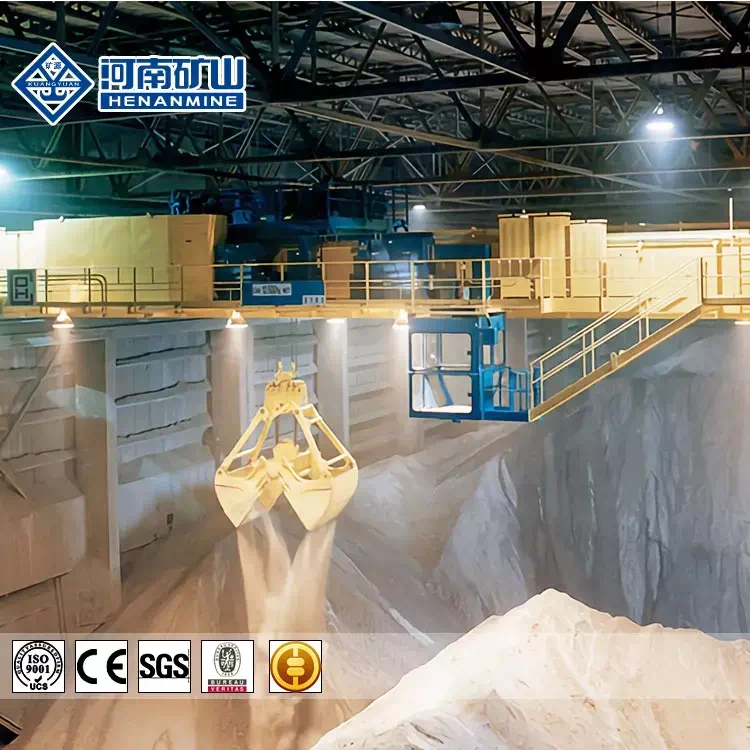
Clamshell Grab
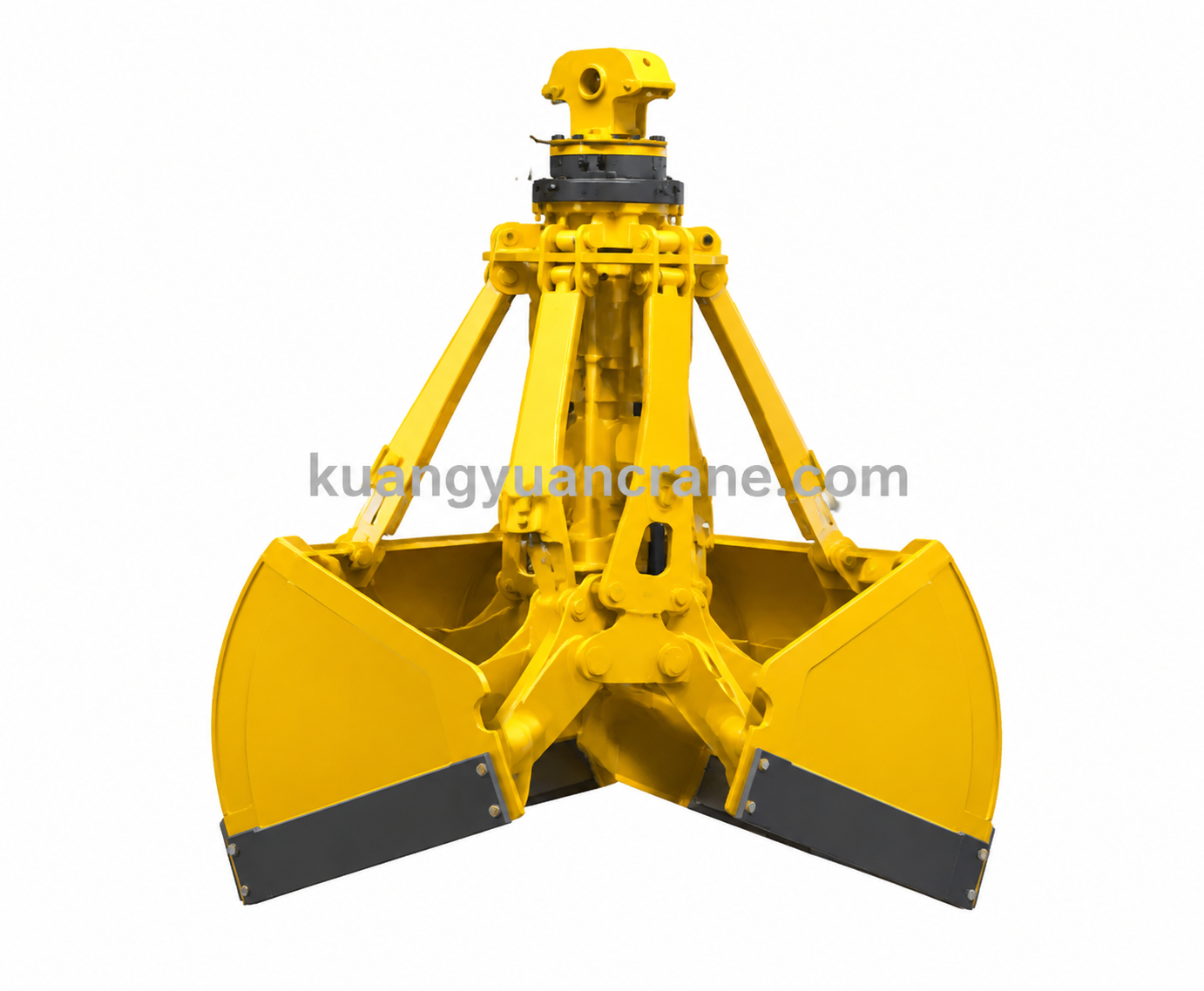
A clamshell grab usually consists of two hinged bucket shells. The two jaws close and open to grab and release materials. When closed, they form a relatively enclosed material-holding space, making this grab type suitable for granular, powdery, and other bulk materials, such as coal, sand, gravel, ore, grain, and fertilizer.
When selecting a clamshell grab, the bulk density, particle size, flowability, and adhesion of the material should be considered. For fine materials with good flowability, attention should be paid to the closing gaps between the bucket shells to reduce material leakage. For wet or sticky materials, an anti-stick design on the inner surfaces of the bucket shells can be considered to reduce material residue.
How to Choose the Right Grab?
The selection between an orange peel grab and a clamshell grab mainly depends on the material type, shape, size, and piling condition. Generally, a clamshell grab is more suitable for granular and bulk materials such as coal, sand, and ore, while an orange peel grab is more suitable for scrap steel, steel slag, and other irregularly shaped materials.
Material bulk density is also an important factor in determining grab capacity. Materials with higher bulk density generally require a smaller grab volume, while materials with lower bulk density may allow a larger grab volume to increase the amount of material handled per cycle.
When determining the grab configuration, the grab's own weight, the actual material load, and the crane's rated lifting capacity must all be considered. The combined weight of the grab and the material must not exceed the crane's rated lifting capacity.
Technical Specifications
Parameters |
5 t |
10 t |
16 t |
20 t |
25 t |
Rated Lifting Capacity (t) |
5 |
10 |
16 |
20 |
25 |
Span (m) |
10–40 |
10–40 |
10–40 |
10–40 |
10–40 |
Lifting Height (m) |
22 |
22 |
22 |
22 |
22 |
Working Class |
A6 / 3M |
A6 / 3M |
A6 / 3M |
A6 / 3M |
A6 / 3M |
Lifting Speed (m/min) |
40.8 |
40.26 |
41.8 |
48.5 |
38.8 |
Grab Opening/Closing Speed (m/min) |
40.8 |
40.26 |
41.8 |
48.5 |
38.8 |
Trolley Traveling Speed (m/min) |
44.5 |
45.6 |
43.2 |
43.2 |
43.2 |
Crane Traveling Speed (m/min) |
92 |
86.5 |
87 |
87 |
87 |
Total Crane Weight (t) |
17.5–38.5 |
25.1–46.6 |
43–63 |
50.6–70.7 |
54.2–75.8 |
Number of Wheels |
4 |
4 |
4 |
4 |
4 |
Maximum Wheel Load (kN) |
To be confirmed |
117–186 |
202–258 |
235–302 |
255–320 |
Recommended Rail |
P43 |
P43 |
P43 |
QU70 |
QU70 |
Power Supply |
3-phase AC, 220–480 V, 50/60 Hz |
3-phase AC, 220–480 V, 50/60 Hz |
3-phase AC, 220–480 V, 50/60 Hz |
3-phase AC, 220–480 V, 50/60 Hz |
3-phase AC, 220–480 V, 50/60 Hz |
Note: The specifications above are for reference. The final crane configuration and technical parameters are subject to the actual design and customer requirements.
The load handling device is the grab which is able to capture bulk materials.
In recent years, Henan Mine Crane has continuously increased its research and development efforts in intelligent, green, and lightweight cranes, and a large number of high-quality cranes have been applied to key engineering fields such as steel smelting, aerospace ships, and petrochemical industry.
This joint venture with Guangxi Yiji Iron and Steel to promote industrial transformation and upgrading, and to jointly build a 10 million tons metallurgical new material (steel) base, not only demonstrates the innovative and creative strength of Henan Mine Crane, but also lays a solid foundation for deep cooperation in technology innovation and other aspects between the two sides.