LDA Electric Single Girder Overhead Crane


- A3
- A4
- A5
-

 Lifting hook
FEATURED PRODUCTS
-
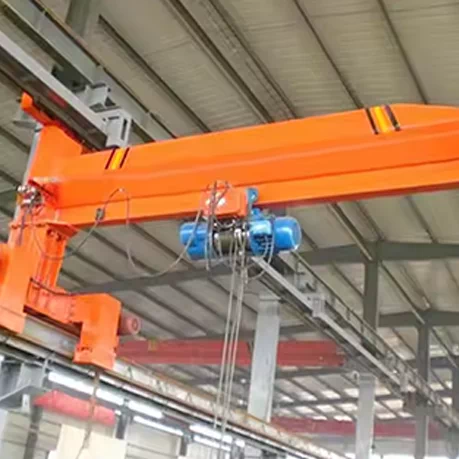 Wall Travelling Jib CraneApply: medium and small light load such as factories and mines, workshops and warehouseLEARN MORE

-
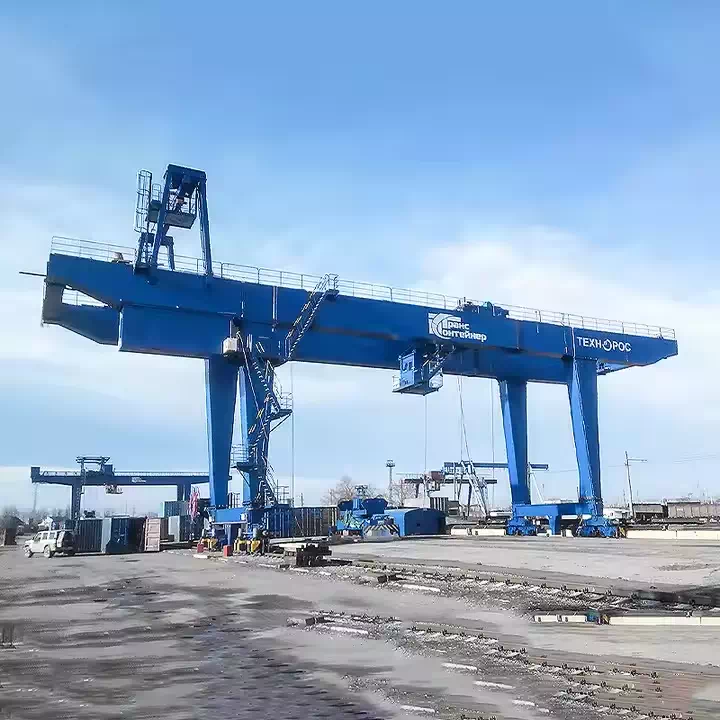 Rail Mounted Container Gantry CraneApply: A Rail Mounted Gantry (RMG) is a specialized material handling equipment used in ports , container terminals, and intermodal yards for efficient cargo movement .LEARN MORE
-
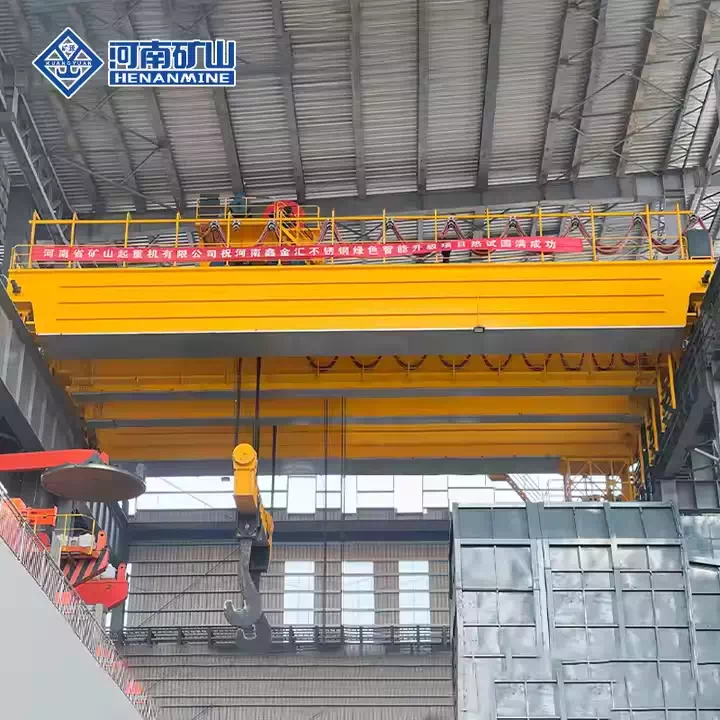 Four Girder Ladle CraneApply: Casting bridge cranes are the main handling equipment for smelting workshop of steel works. They are used for conveying, pouring and hot metal charging of liquid metal in smelting process.LEARN MORE
-
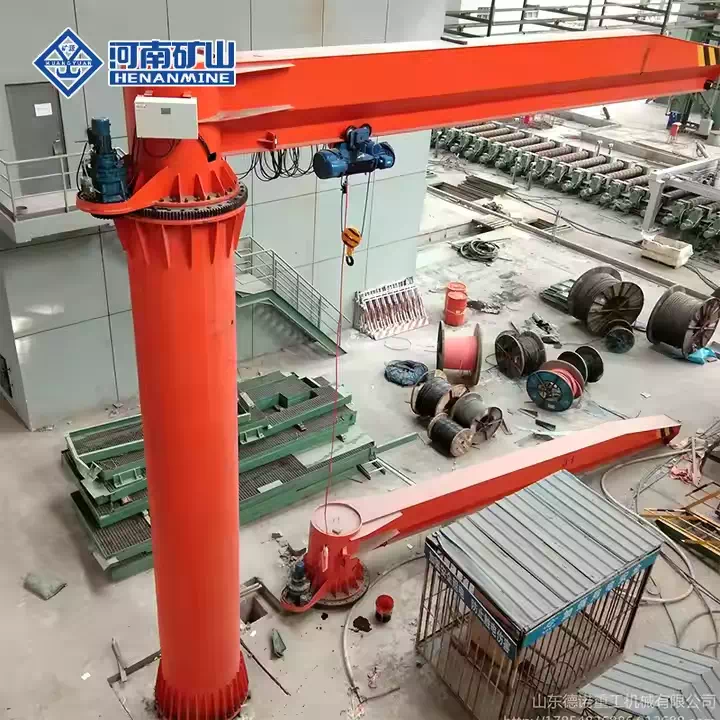 Column Cantilever CraneApply: It can be operated under three-dimen-sional environment, It is superior in the cases of short distance, concentrated lifting. It is widely used at various sites for various trades.LEARN MORE
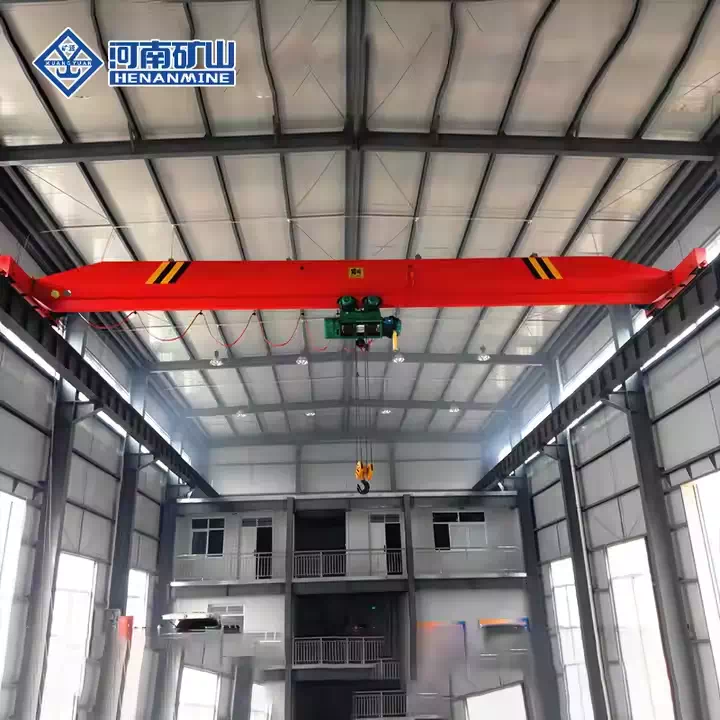
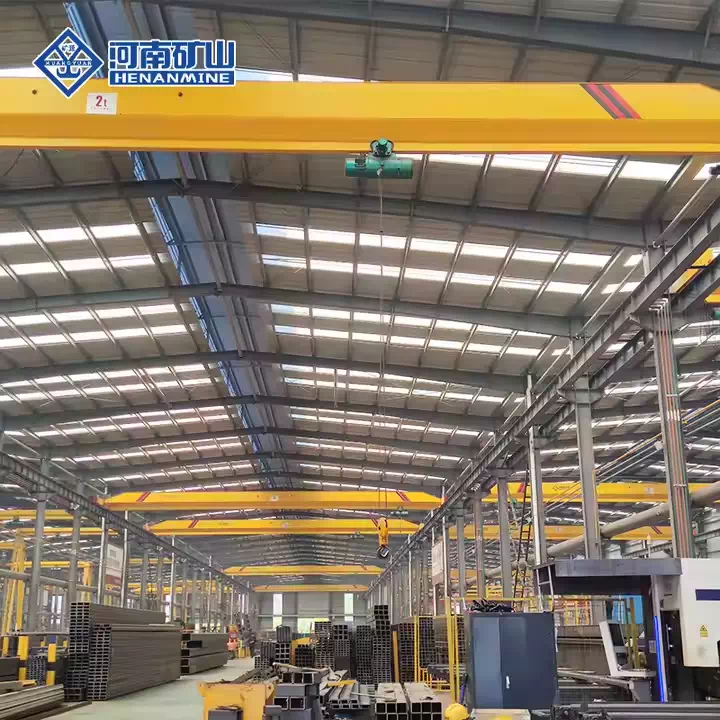
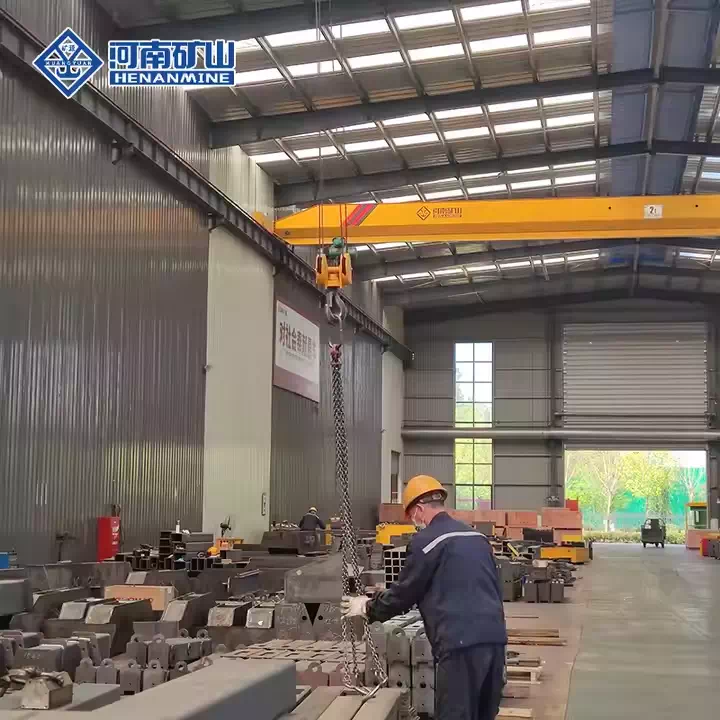
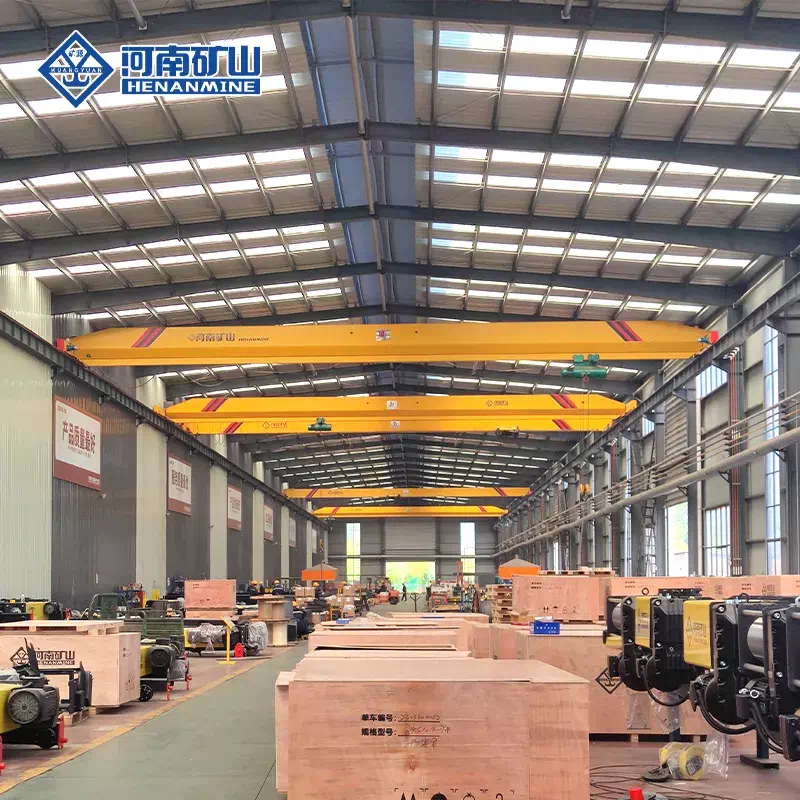
The LDA electric single girder overhead crane is an improved version of the conventional LD single girder overhead crane. It features an optimized main girder structure, a compact travelling mechanism, and flexible electric hoist configurations. It is suitable for material handling in workshops, warehouses, and general manufacturing facilities.
Mine Crane provides customized LDA overhead crane solutions based on the required lifting capacity, span, lifting height, working conditions, and workshop layout. Hoist type, control method, travel speed, and other configurations can be selected according to the actual project requirements.
Technical Parameters of LDA Electric Single Girder Overhead Crane
Parameter |
Specification |
|
Capacity |
0.25t~20t |
|
Span |
4.5–25m, customized |
|
Lifting Height |
8/2.7 m/min (two-speed), VFD optional |
|
Travel |
Cross Travel |
2–20 m/min (VFD) |
Long Travel |
3–30 m/min (VFD) |
|
Working Class |
A3–A5 (FEM M3–M5) |
|
Hoist |
CD1/MD1 MD1/HC |
|
Hook |
DIN15401-1.6/2.5/5/10/15T |
|
Operating Temp |
-20℃~+45℃ |
|
Power Supply |
380 V/50 Hz, three-phase; 460 V/60 Hz, 400 V/50 Hz, and 220 V/60 Hz available upon customization |
|
Control |
Radio remote control and wired pendant control |
|
Design Code |
GB/T3811, FEM |
|
Note: Actual specifications depend on the crane configuration and project requirements. Please confirm the hoisting speed, hook specification, and applicable design standards before publication.
Features and Design of LDA Single Girder Overhead Crane
1. Main Girder and Bridge Structure
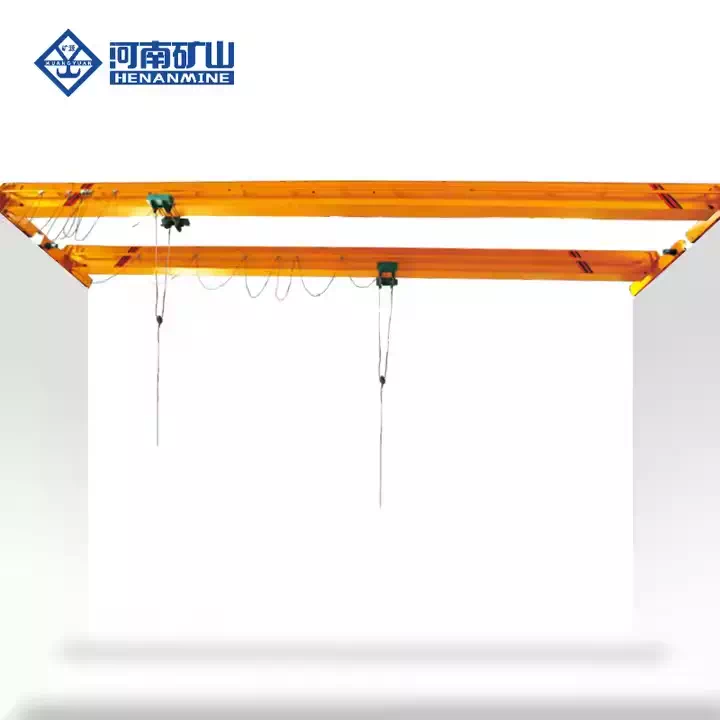
The LDA electric single girder overhead crane consists of one main girder and two end carriages. Compared with the conventional LD electric single girder overhead crane, the LDA design incorporates a welded U-shaped plate assembly that creates partially box-shaped sections in the main girder structure. This helps improve its bending and torsional stiffness.
The end carriages are equipped with travelling wheels, allowing the overhead crane to move along the runway rails. With an optimized structural design, the LDA crane can achieve lower self-weight and greater stiffness for the same span, subject to the specific design and load requirements.
For a customized single girder crane design, the main girder dimensions and structural arrangement should be determined according to the rated lifting capacity, crane span, working duty, and applicable deflection requirements. The resulting wheel loads should also be checked against the capacity of the runway structure.
2. Electric Hoist and Trolley Design
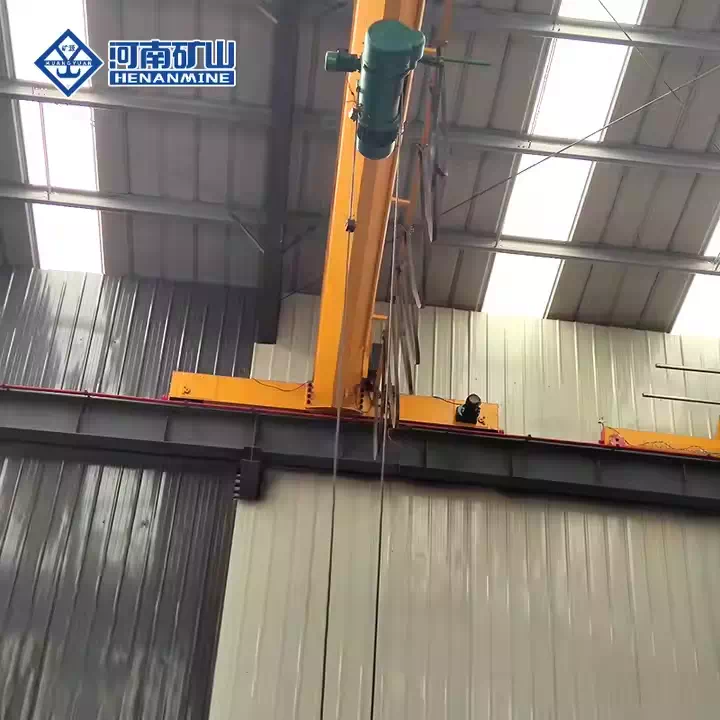
The trolley is the travelling mechanism that moves along the main girder, while the electric hoist is mounted on the trolley to lift and lower materials. CD1 and MD1 wire rope hoists are commonly used, depending on the required lifting capacity, lifting height, and operating conditions.
The trolley drive integrates the geared motor, brake, and travelling wheels into a compact arrangement. This design helps simplify the drive structure and makes routine inspection and maintenance more convenient.
The electric hoist can be equipped with safety devices such as an overload limiter, a dual braking arrangement, and upper and lower hoisting limit switches, depending on the selected configuration.
When selecting an electric hoist overhead crane, the available headroom should also be checked. If the building has limited vertical clearance, the hoist arrangement and required hook height need to be considered together to determine whether a low-headroom solution is necessary.
3. Crane Travelling Mechanism and Drive System
The crane travelling mechanism moves the entire bridge along the runway rails. Its drive system typically includes travelling motors, gearboxes, and wheels, with the configuration selected according to the crane specifications and operating requirements.
If more flexible speed adjustment and smoother acceleration and deceleration are required, variable frequency drive (VFD) control can be considered. VFD control allows the travelling speed to be adjusted to suit different material handling tasks and workshop layouts.
The motor power, travelling speed, and drive arrangement should be selected according to the crane span, moving mass, working duty, and required operating performance. These factors help determine a suitable overhead crane drive system for the intended application.
4. Electrical Control and Safety Devices
The LDA overhead crane can be configured with both radio remote control and wired pendant control. The appropriate control method depends on the operator's working position, the workshop layout, and the requirements of the lifting task.
Safety devices may include lifting limit switches, travelling limit switches, overload protection, and emergency stop functions, depending on the selected configuration and applicable requirements. These devices help restrict unsafe movements and support safer daily operation.
The electrical control system, power supply, protection level, and safety equipment should be confirmed before manufacturing. For projects with special environmental requirements, the electrical components and protective measures should also be selected to suit the actual operating conditions.
How to Choose the Right LDA Overhead Crane Specifications
Selecting an LDA electric single girder overhead crane involves more than choosing a rated lifting capacity. The crane specifications should match the materials being handled, the required lifting movements, and the available installation space.
Before requesting a quotation, confirm the following information.
1. Determine the Rated Lifting Capacity, Span, and Lifting Height
Start by confirming the maximum load to be lifted, the distance between the runway rails, and the required hook lifting height. These basic parameters directly affect the crane's structural design, hoist selection, and overall dimensions.
The rated lifting capacity should account for the heaviest load that the crane is required to handle. The span should be measured according to the actual runway arrangement, while the lifting height should be based on the required distance between the hook's working positions.
2. Check the Available Headroom
Measure the vertical distance between the building reference level, the crane runway, and the highest obstruction above the crane. Also consider the required hook height and the space occupied by the electric hoist and trolley.
If the available headroom is limited, a low-headroom hoist arrangement may need to be considered. The actual solution depends on the building dimensions, lifting requirements, and selected crane configuration.
3. Check the Side Clearance and Workshop Layout
Measure the available space between the crane and nearby columns, walls, equipment, and other obstructions. Insufficient side clearance may interfere with trolley travel, end carriage movement, or access for maintenance.
The runway arrangement and surrounding structures should therefore be checked before the final crane dimensions are confirmed.
4. Confirm the Control Method and Working Duty
Radio remote control and wired pendant control offer different operating arrangements. The choice should be based on the operator's position, visibility, and the lifting process.
Working duty is another important factor. A crane used occasionally for light material handling may require a different configuration from one that operates frequently throughout a production shift. The working duty should be assessed together with the load spectrum and expected operating frequency.
5. Check the Maximum Wheel Load
The maximum wheel load is an important consideration when selecting an overhead crane for an existing workshop. It affects the loads transferred to the runway rails, runway beams, brackets, columns, and supporting structure.
The required wheel-load information should be confirmed during crane design and checked against the capacity of the existing supporting structure. If the crane is being installed in an existing building, the supporting structure should be evaluated before installation.
FAQ
Can Mine Crane Customize an LDA Electric Single Girder Overhead Crane?
Yes. Mine Crane can customize LDA electric single girder overhead cranes according to the required control method, span, lifting capacity, and other project requirements. Low-headroom, explosion-proof, and corrosion-resistant configurations can also be discussed where technically suitable.
To help determine the appropriate solution, provide the required lifting capacity, span, lifting height, working duty, power supply, and workshop drawings if available.
What Is the Difference Between LDA and LD Single Girder Overhead Cranes?
The LD is the conventional single girder overhead crane type, while the LDA is an improved version with an optimized structural design. Although the two models may look similar, their structural arrangements and configurations can differ.
The LDA design described here uses a partially box-shaped main girder structure to improve bending and torsional stiffness. Its optimized structure is intended to reduce self-weight while maintaining the required structural performance. Actual weight, stiffness, and travelling performance depend on the crane specifications and design.
When comparing LDA and LD cranes, it is important to check the main girder structure, rated capacity, span, wheel load, hoist configuration, and working duty rather than relying on the model name alone.
Can Mine Crane Supply an LDA Overhead Crane with a CD1 Electric Hoist?
Yes. Mine Crane manufactures different types of electric hoists and can provide a suitable CD1 electric hoist configuration for an LDA overhead crane when it matches the project requirements.
The hoist should be selected according to the rated lifting capacity, lifting height, hoisting speed, working duty, and available headroom. These details should be confirmed before the final configuration is determined.
What Information Is Needed for an LDA Overhead Crane Quotation?
To prepare a suitable quotation, provide the required lifting capacity, crane span, lifting height, working duty, control method, power supply, and operating environment. Workshop drawings and details of the existing runway structure are also helpful, especially for replacement projects or installations in existing buildings.
Based on this information, Mine Crane can evaluate the required crane configuration and discuss a customized solution for your material handling needs.
This product is widely used in plants warehouses, material stocks to lift goods. It is prohibited to use the equipment in the
combustible, explosive or corrosives environment.