Double Trolley Hook Overhead Crane


- A4
- A5
- A6
- A7
-

 Lifting hook
-

 Grab bucket
-

 Magnetic chuck
FEATURED PRODUCTS
-
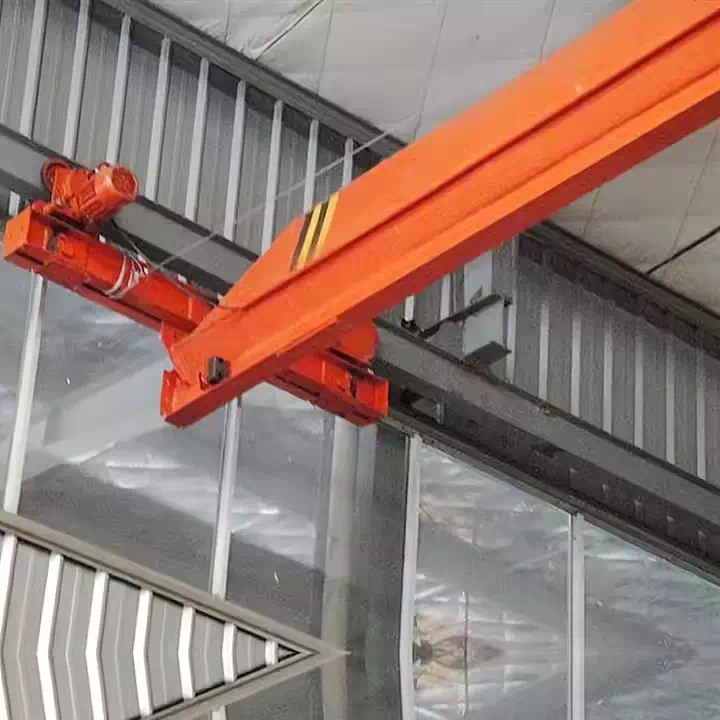 LX Type Suspended Single Girder Overhead CraneApply: This crane is applicable in factories and warehouses where the height from the rail surface to the lower edge of the truss is equal to or shorter than 500mm. LEARN MORE

-
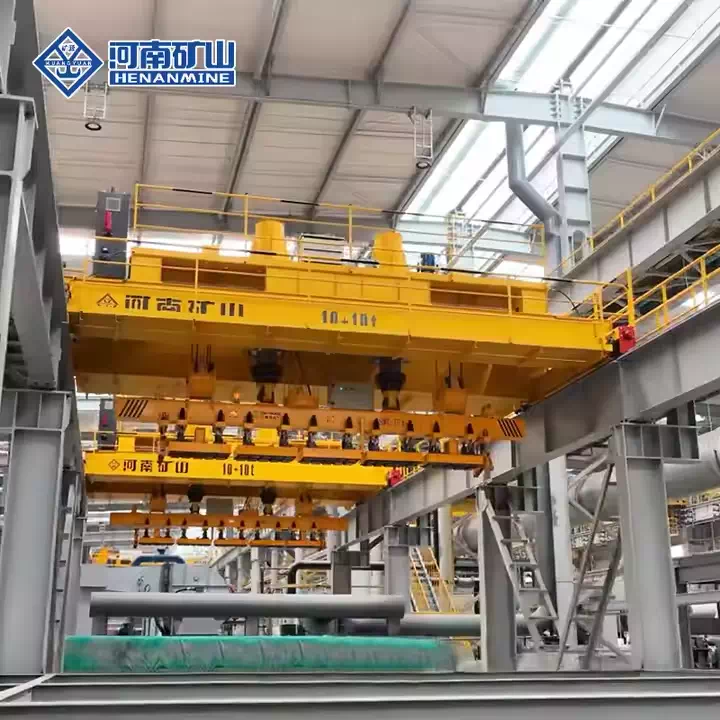 Hang Beam Double Girder Overhead CraneApply: The crane is suitable for loading, unloading and handling steel plates, section steels,coils and other materials in indoor or outdoor fixed spans of steel plants, shipyards, ports, storage yards and warehouses.LEARN MORE
-
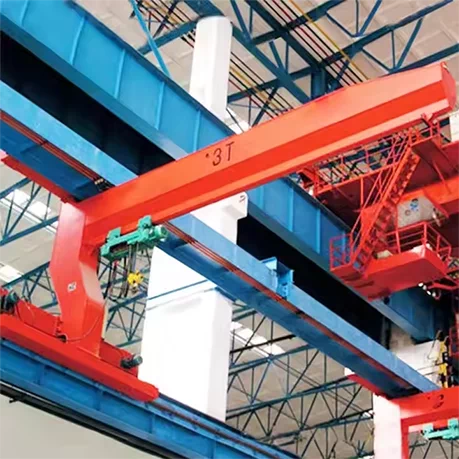 Wall Mounted Jib CraneApply: It is applicable to operational site of medium and small light load such as factories and mines, workshops and warehouse.LEARN MORE
-
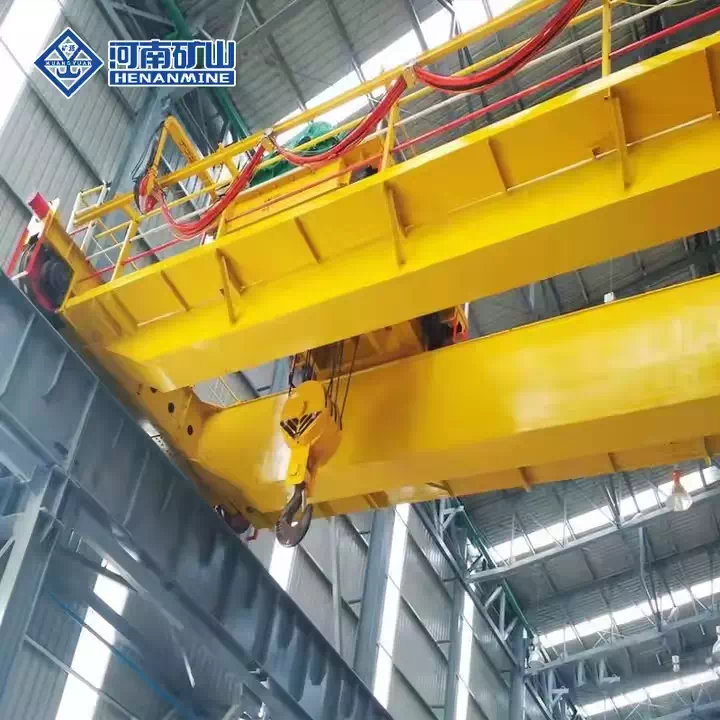 QY Series Insulated Double Girder Overhead CraneApply: The crane is applicable to aluminum and magnesium smelting factories.LEARN MORE
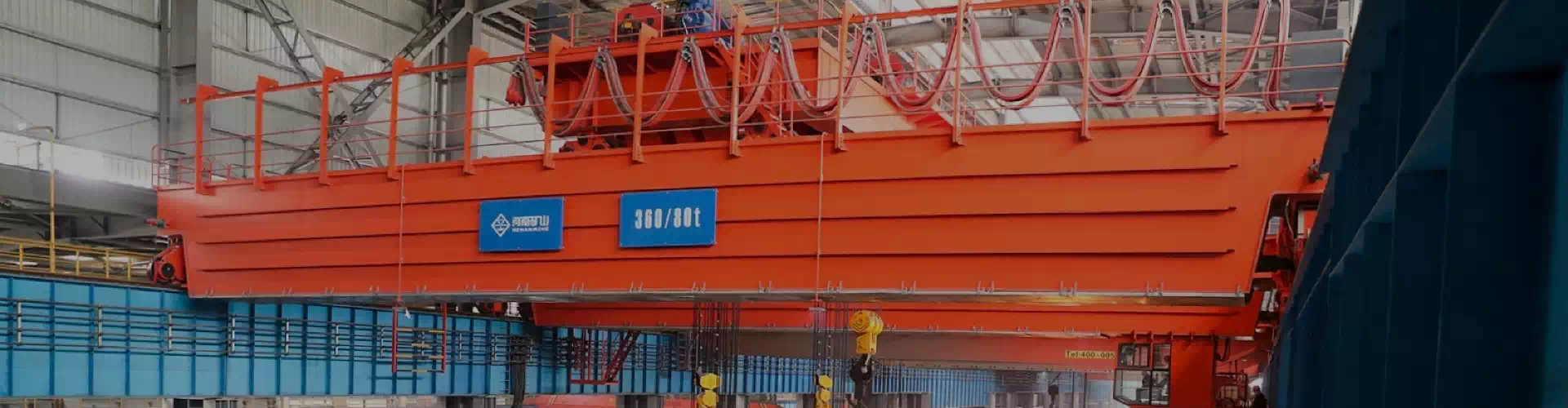
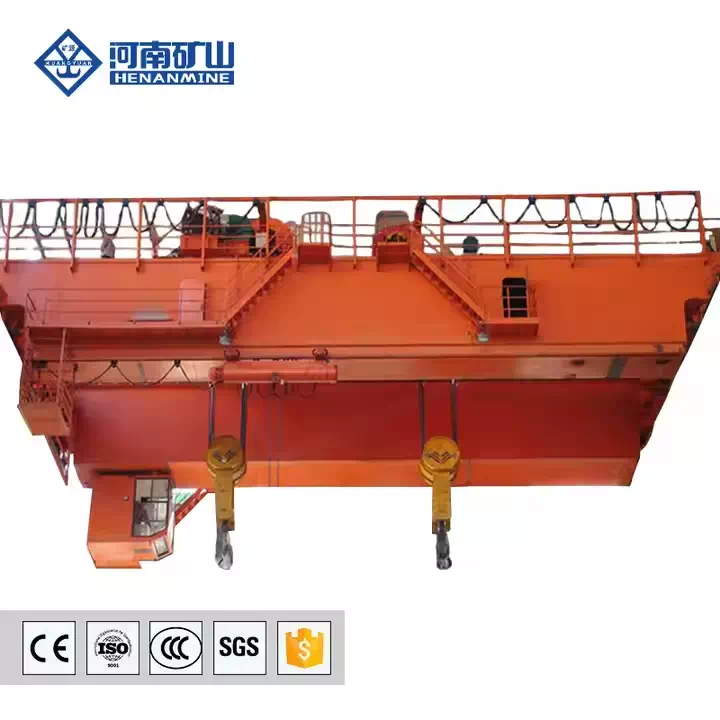
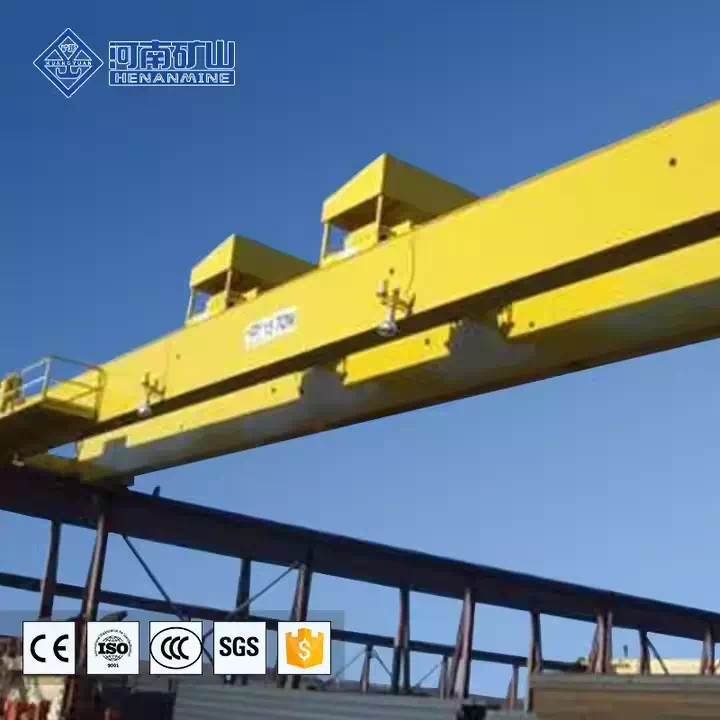
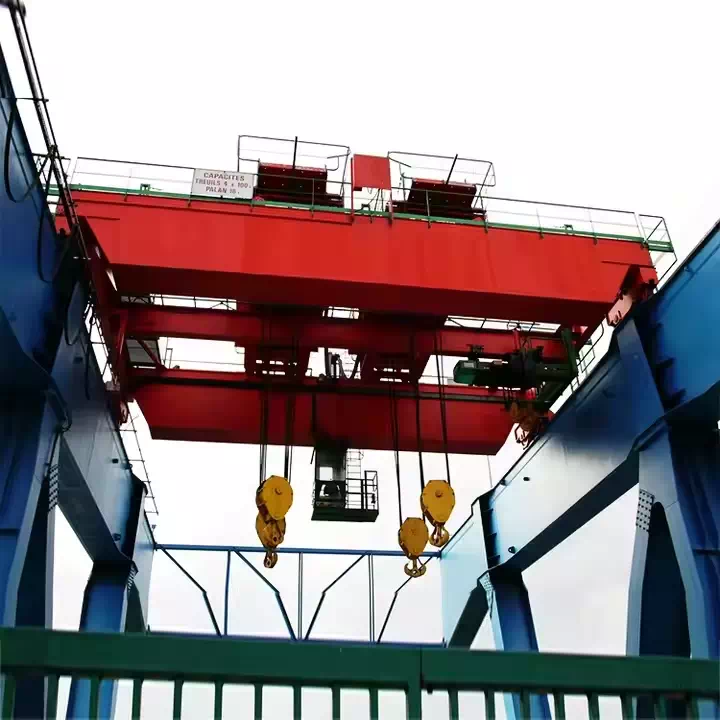
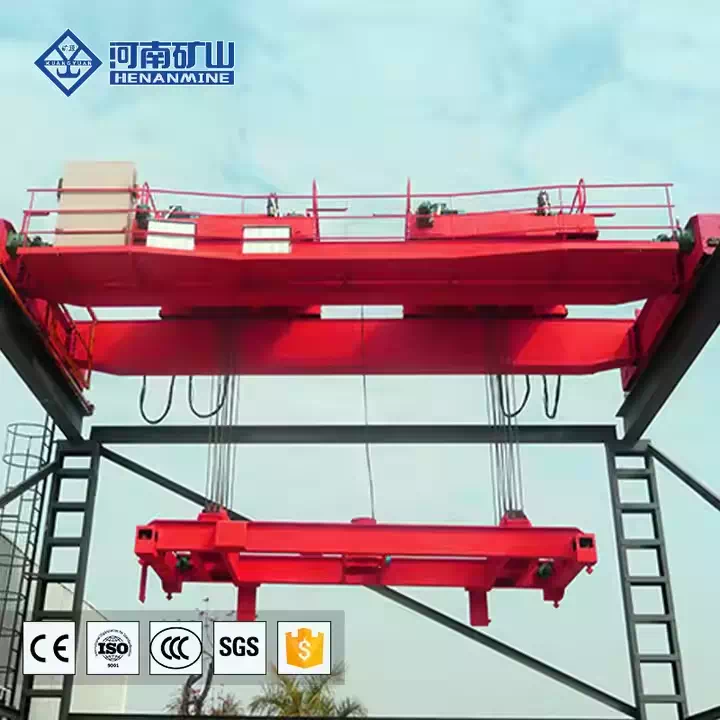
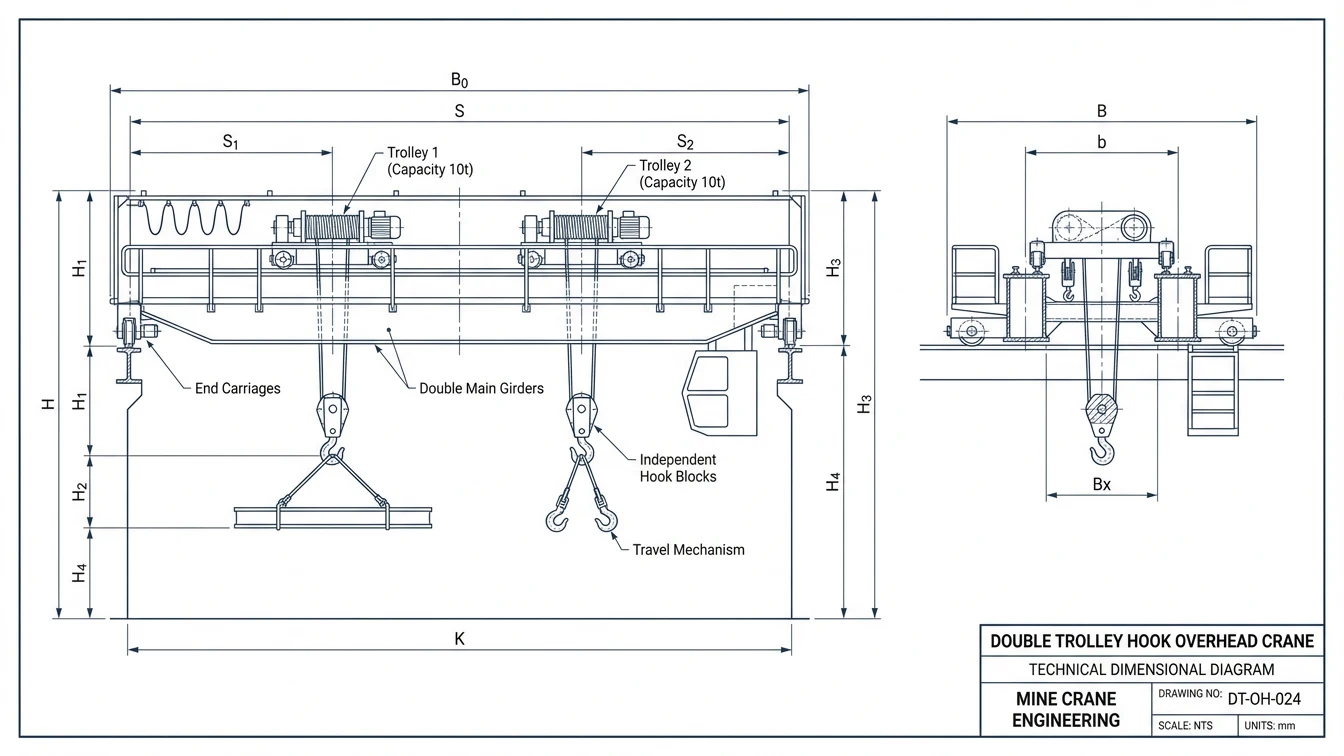
Double Trolley Hook Overhead Crane is a double-girder bridge crane equipped with two independent lifting trolleys, mainly composed of a double-girder bridge frame, end carriages, a bridge traveling mechanism, two independent lifting trolleys, an electrical control system, and safety protection devices. Each trolley is equipped with an independent hoisting mechanism and traveling mechanism, allowing independent or coordinated operation according to actual lifting needs.
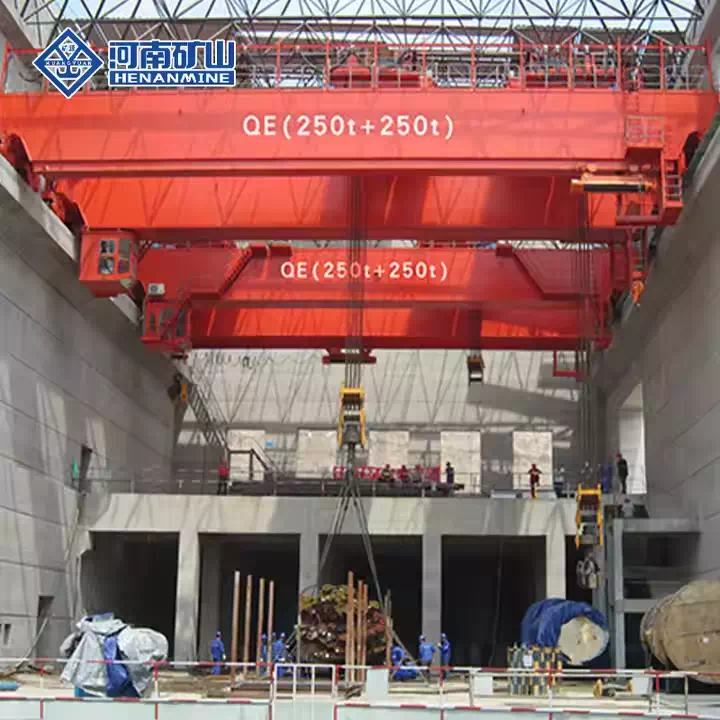
Unlike a traditional single-trolley double-girder overhead crane, this Double Trolley Overhead Crane adopts two independent lifting trolleys, each with independent hoisting and traveling functions. The two hooks can be adjusted according to the length of the cargo, weight distribution, and lifting point positions, making this QE Double Trolley Overhead Crane suitable for handling long, large, or irregularly shaped materials, especially working conditions that require two-point lifting support.
The two lifting trolleys can operate independently or achieve coordinated work through the PLC control system. During two-point synchronized lifting, the control system can coordinate the traveling speed and hoisting actions of the two trolleys to maintain synchronization during the lifting process. Depending on the configuration, a laser distance measuring device can also be used to monitor the distance between the two trolleys, combined with safety interlocks, overload protection, and other functions to reduce the risks of collision and off-center loading during operation.
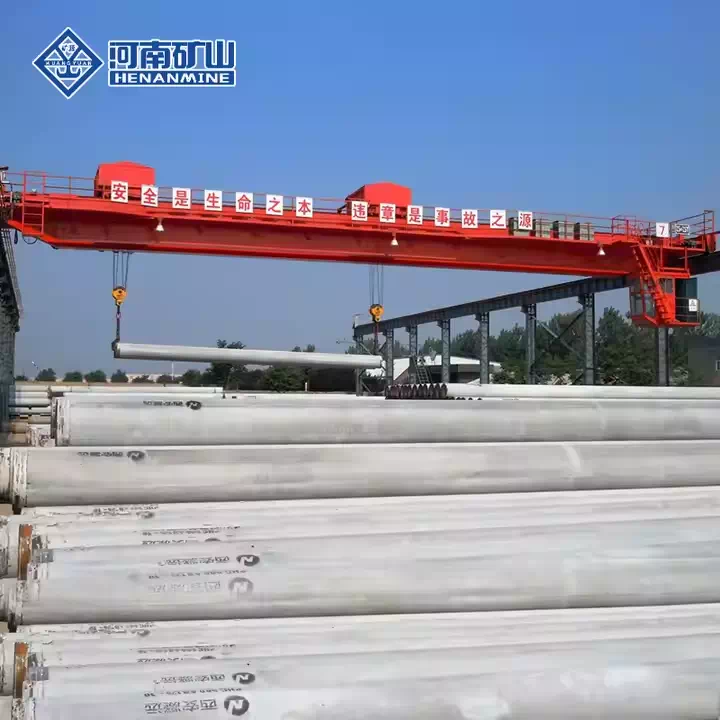
Whether you are handling steel pipes, paper tubes, timber, or paper rolls, this twin-trolley double-girder bridge crane for long materials can lift and complete the handling tasks well.
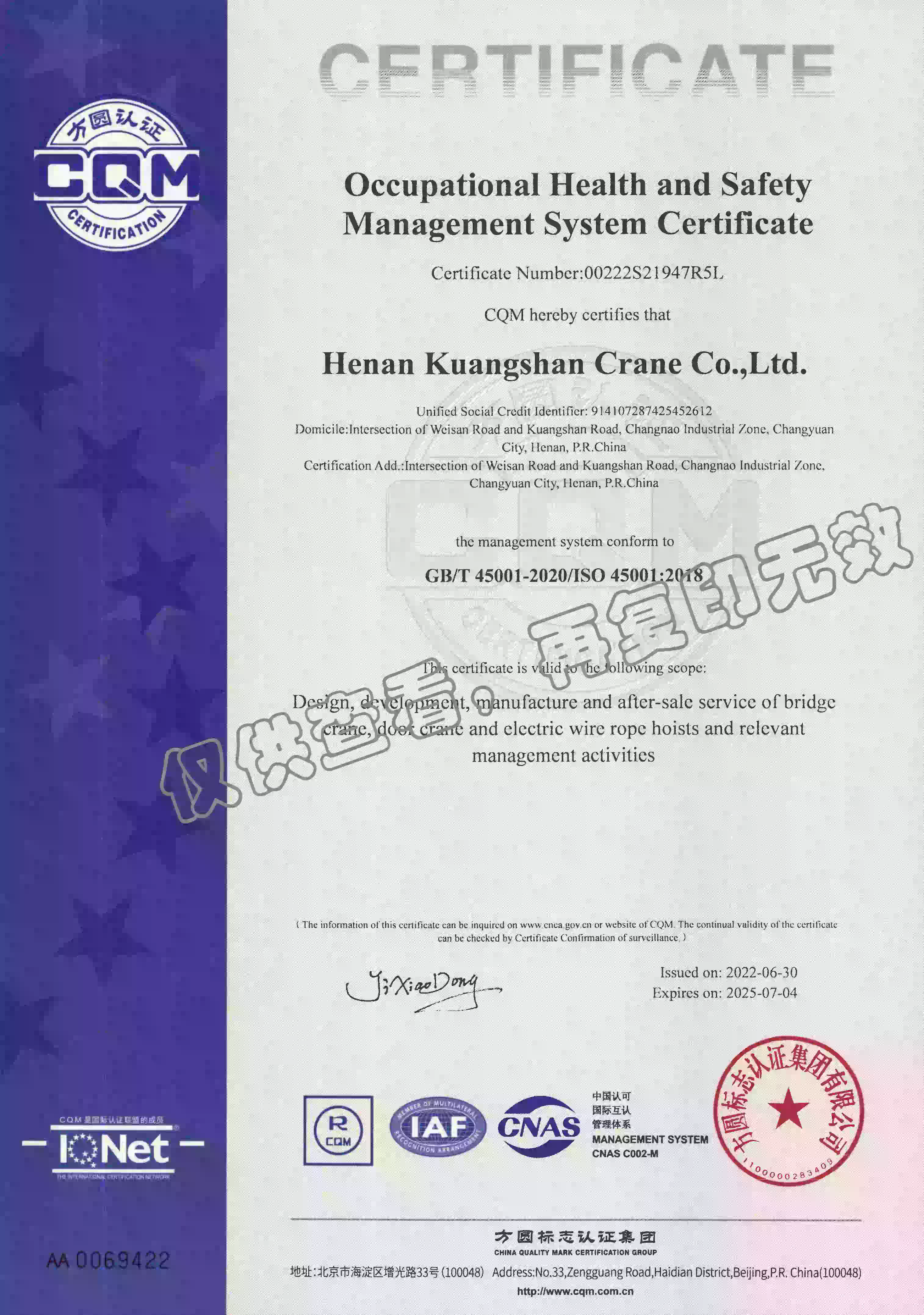
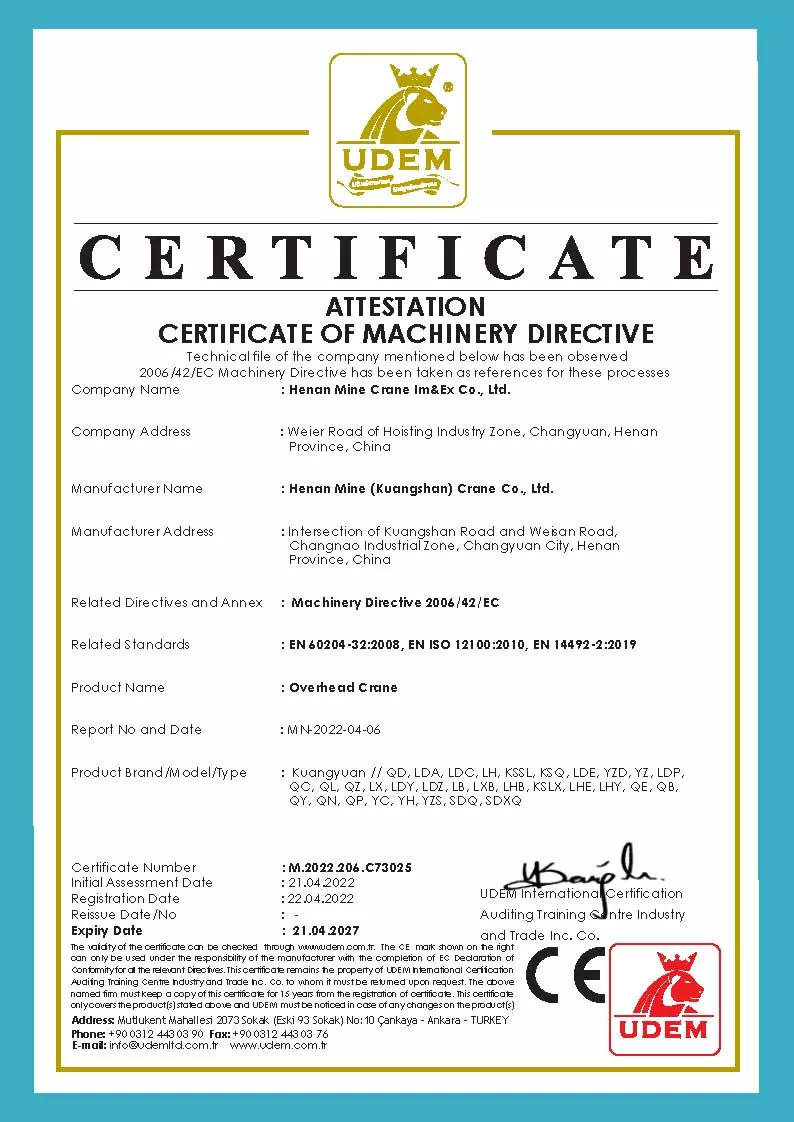
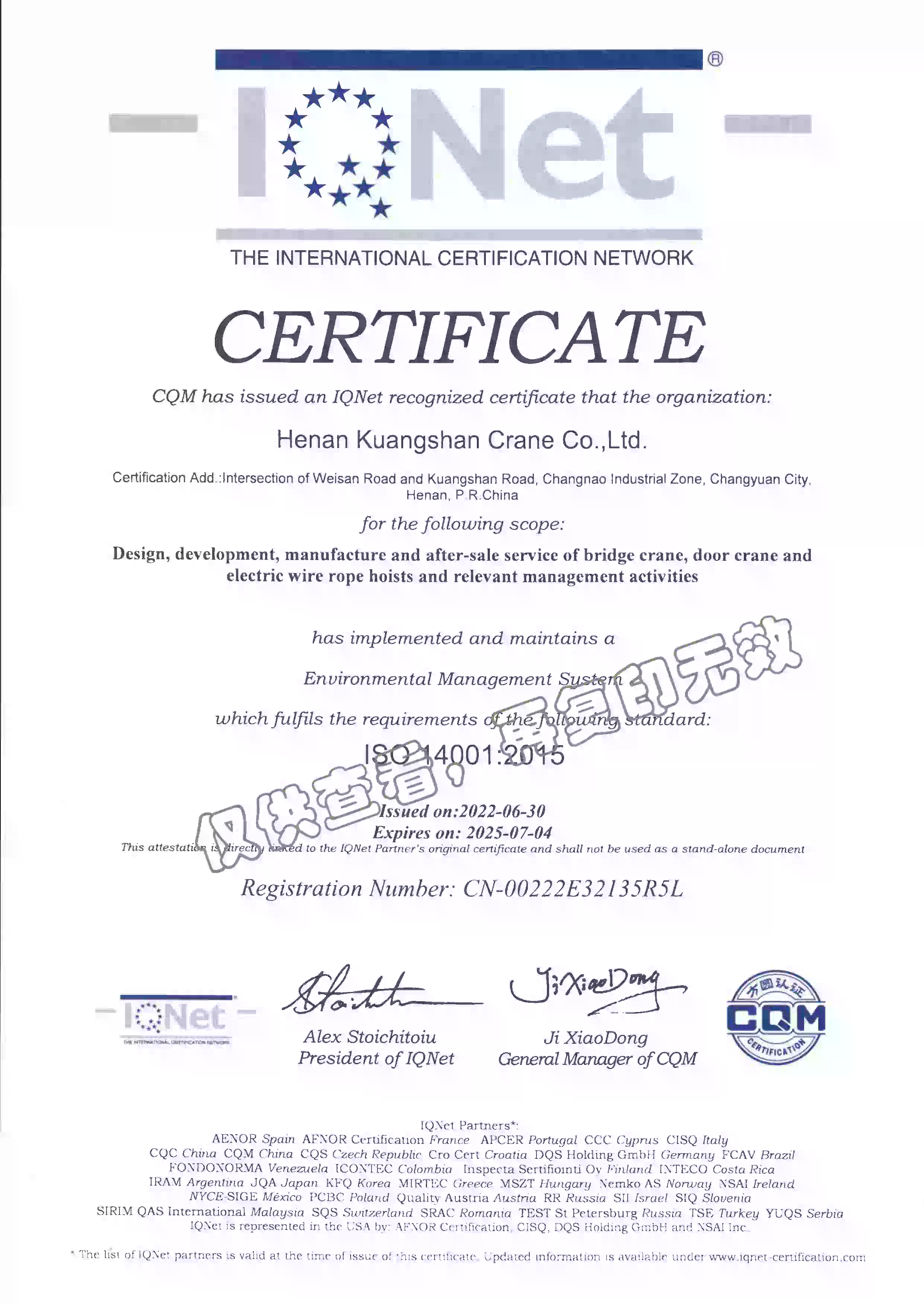
In addition, we can provide ISO 14001 environmental management system and ISO 45001 occupational health and safety management system certification documents, as well as applicable CE machinery conformity documents. If the country or region where the project is located has other certification requirements, corresponding support can also be provided according to specific requirements.
Technical data
Item |
Parameter |
Unit |
5+5t |
10+10t |
16+16t |
Lifting Capacity |
Lifting Capacity |
t |
5+5 |
10+10 |
16+16 |
Span |
Span |
m |
10.5/13.5/16.5/19.5/22.5/25.5/28.5/31.5 |
10.5/13.5/16.5/19.5/22.5/25.5/28.5/31.5 |
10.5/13.5/16.5/19.5/22.5/25.5/28.5/31.5 |
Max. Lifting Height |
Max. Lifting Height |
m |
16 |
16 |
16 |
Speed |
Hoisting (A5) |
m/min |
11.3 |
8.5 |
7.9 |
Hoisting (A6) |
m/min |
15.6 |
13.2 |
10.7 |
|
Crab (A5) |
m/min |
37.2 |
43.8 |
44.6 |
|
Bridge (A5) |
m/min |
90.7/91.9/84.7 |
84.7/87.6 |
87.6/74.2/74.6 |
|
Bridge (A6) |
m/min |
92.7/93.7/86.5 |
76/89 |
89/75.3/75.3 |
|
Weight |
Crab (A5) |
kg |
2126×2 |
3424×2 |
5480×2 |
Crab (A6) |
kg |
2224×2 |
3562×2 |
5760×2 |
|
Total Weight (A5) |
kg |
14741/16622/19352/21148/23646/28075/31456/34875 |
19947/21375/23541/27705/30304/34660/38352/41497 |
26873/29009/32093/36494/39816/44934/49290/52720 |
|
Total Weight (A6) |
kg |
15406/17290/20020/21724/24213/28579/31970/35389 |
20984/22802/25190/29689/32426/36791/40589/44225 |
28061/30292/33412/38607/42832/47023/50586/55272 |
|
Max. Wheel Pressure |
Max. Wheel Pressure (A5) |
kN |
101/107/116/121/128/132/140/149/158 |
161/167/176/189/197/209/220/229 |
235/248/260/273/287/303/315/325 |
Max. Wheel Pressure (A6) |
kN |
104/111/120/125/132/138/144/152/162 |
167/174/183/197/205/218/229/239 |
242/255/268/285/299/312/322/335 |
|
Recommended Steel Track |
Recommended Steel Track |
— |
P43 |
P43 |
QU70 |
Power Source |
Power Source |
— |
Three-phase AC, 50Hz, 380V (Customizable) |
Three-phase AC, 50Hz, 380V (Customizable) |
Three-phase AC, 50Hz, 380V (Customizable) |
Note: Customization description: The 5+5t, 10+10t, and 16+16t models listed above are standard configurations. If your site requires special lifting capacity, non-standard span, higher lifting height, or local voltage adaptation, Mine Crane can provide tailored engineering solutions and CAD drawings. [Request Custom Quote and CAD Drawings]
Principles and Features of Two-Point Lifting in Improving Crane Operation Performance
Load Sharing and Bridge Force Optimization (Improving Structural Mechanics Distribution)
When only one trolley bears the load, all loads are concentrated on one lifting point, which causes the main girder to bear a huge concentrated bending moment and local wheel pressure; to ensure safety, the main girder can only be made larger and thicker.
A double-trolley double-girder bridge crane has two trolleys and two lifting points, which can divide the total load of materials in two and disperse it along the span of the main girder. This mechanical optimization reduces the maximum bending moment and deflection (downward deflection) at mid-span of the main girder, making the force on the bridge and main girder more uniform.
Constraining Degrees of Freedom and Suppressing Load Sway (Improving Stability and Positioning Accuracy)
When only one trolley lifts an object, the object may sway back and forth or left and right due to factors such as airflow or inertia. A Double Trolley Overhead Crane has 2 lifting points. In geometric space, the lifted object can form a stable geometric shape; mechanically, the two lifting points on the same horizontal line lock rotation around the vertical axis, and lateral torsional resistance is enhanced.
Adapting to Extra-Long and Irregular Workpieces, Avoiding Risks from Cantilever (Expanding Working Condition Adaptability)
When single-point lifting transports extra-long workpieces (such as steel materials, paper rolls, and wind turbine blades), even if a spreader beam is added, there will still be a relatively long cantilever on both sides of the workpiece, which easily causes tilting or even scraping against the workshop.
On this basis, two-point lifting for extra-long workpieces can flexibly change the hook distance and directly grip the optimal mechanical support points of the workpiece (such as lifting lugs at both ends). This eliminates the need to install a bulky spreader beam that occupies effective space, retains more lifting height, and makes extra-long workpieces more stable during lifting.
Coordinated Control Supporting Precision Leveling and Tilting in Mid-Air, Adapting to Complex Processes (Improving Economy and Safety)
Ordinary single-point lifting cannot change the tilt angle of a workpiece in mid-air; to change the workpiece posture, it can only be put back on the ground first and then coordinated through a ground turning frame or two independent cranes, increasing danger.
Through the PLC control system and encoder feedback, the two lifting points of a synchronized double-trolley crane have two operating states: synchronous operation keeps the workpiece stable and horizontal; during differential operation, angle fine-tuning of the workpiece is completed through the hoisting of one hook. This function allows the workpiece to complete 90°/180° flipping in mid-air, reducing process steps and the use of turning frames or two independent cranes, and improving economy and safety.
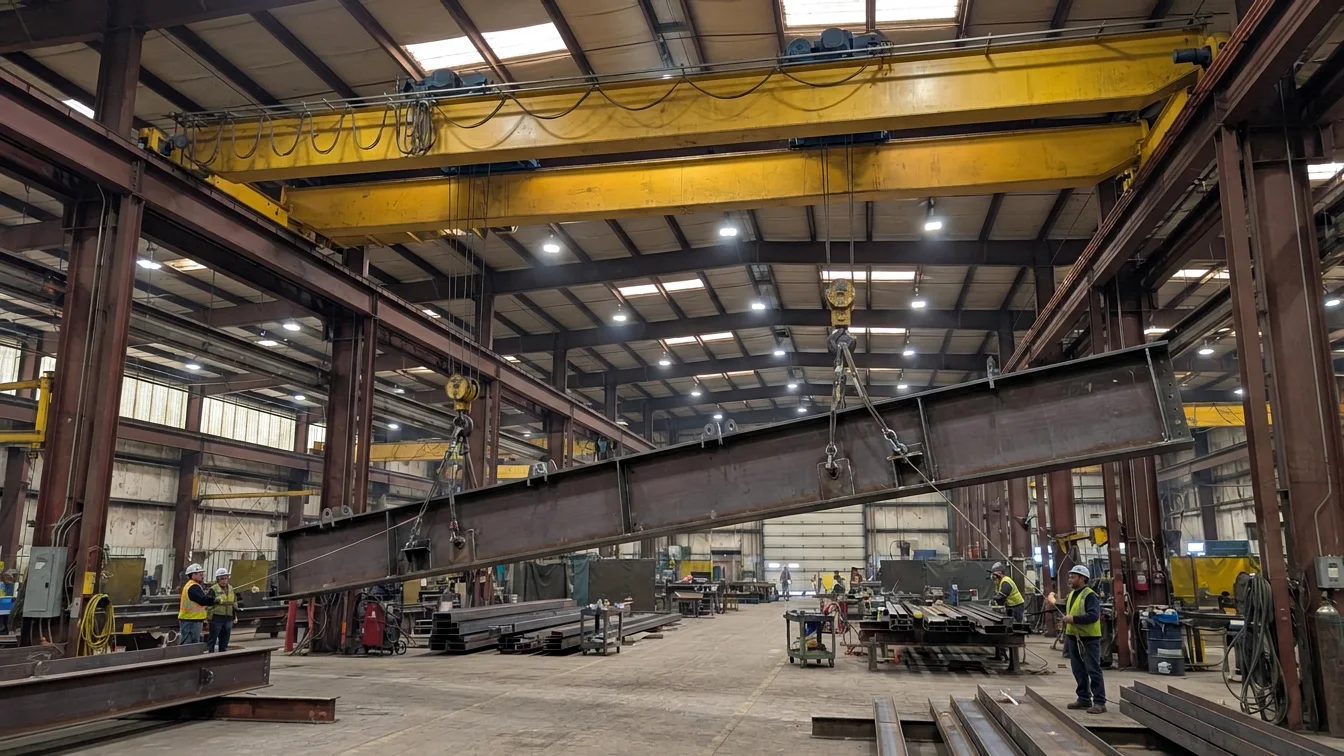
A QE Double Trolley Overhead Crane is suitable for occasions involving long workpieces, mid-air tilting and flipping, high precision, and heavy equipment handling. Steel structure and heavy equipment workshops: assembly, welding, transfer, and positioning of steel beams, steel columns, steel coils, and ladles, where two lifting points can keep the workpiece horizontal and stable.
Wind power equipment manufacturing: towers and blades have large length spans, and two lifting points can find the best mechanical support points, avoiding the danger brought by cantilever on both sides.
Shipbuilding and offshore engineering: hull sections, cabin sections, and large pipes need mid-air rotation and flipping before precise alignment, and two trolleys can be controlled in coordination to complete large-piece flipping operations.