QY Series Insulated Double Girder Overhead Crane


- A6
-

 Lifting hook
FEATURED PRODUCTS
-
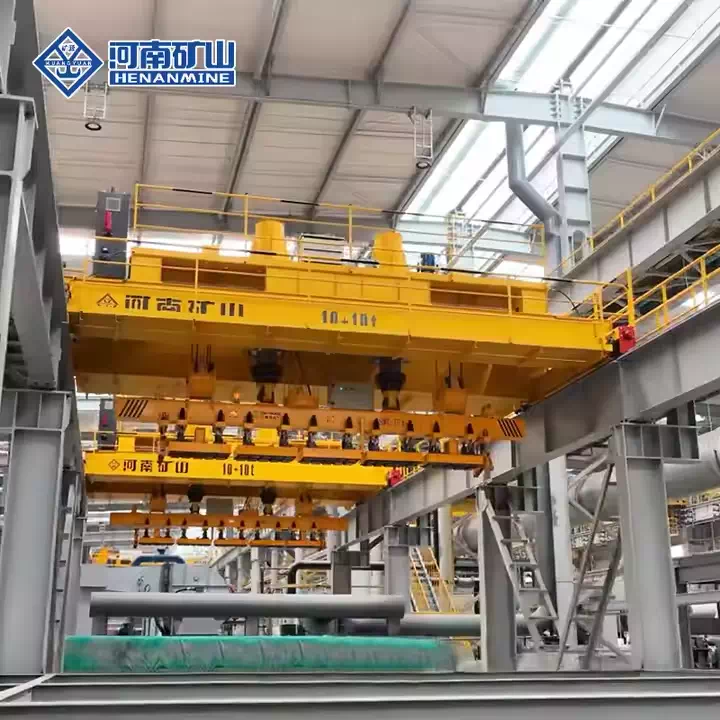 Hang Beam Double Girder Overhead CraneApply: The crane is suitable for loading, unloading and handling steel plates, section steels,coils and other materials in indoor or outdoor fixed spans of steel plants, shipyards, ports, storage yards and warehouses.LEARN MORE

-
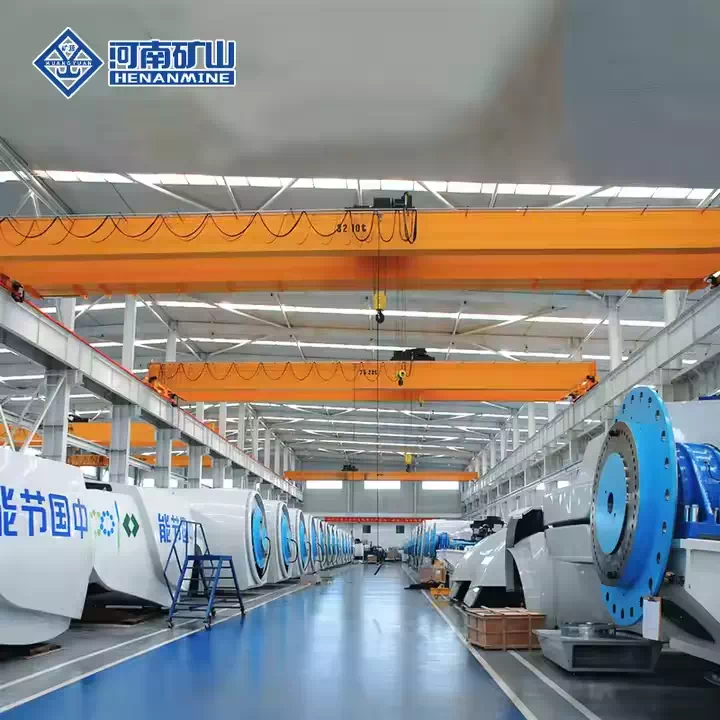 New Types Double Girder Overhead CraneApply: The European overhead crane is suitable for machinery manufacturing and assembly, petrochemical, warehousing and logistics, power construction, paper industry, railway and other industries.LEARN MORE
-
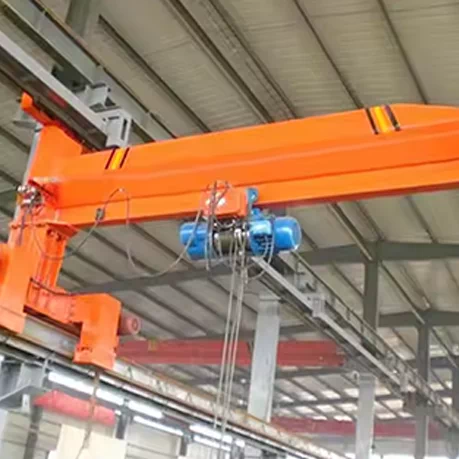 Wall Travelling Jib CraneApply: medium and small light load such as factories and mines, workshops and warehouseLEARN MORE
-
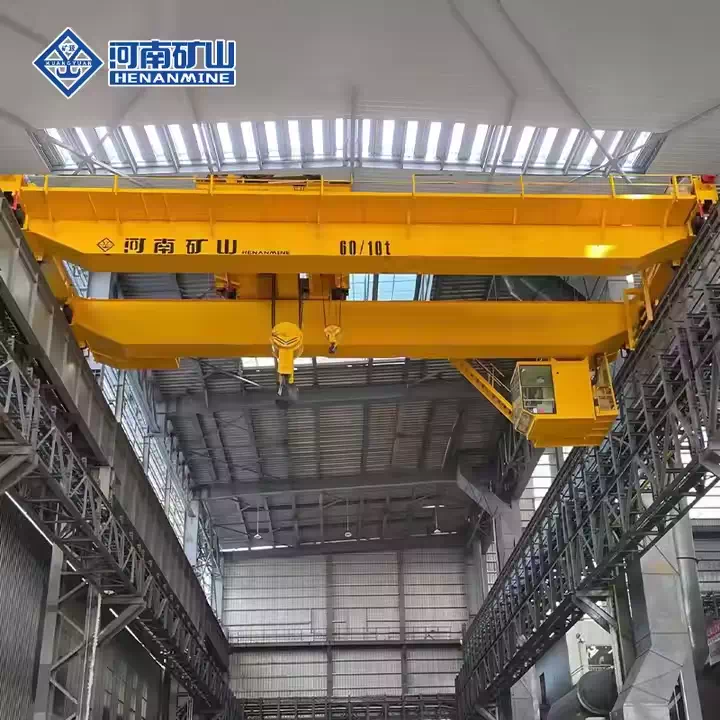 New Types Heavy Duty Double Girder Overhead CraneApply: It is applied in industry of machinery production, assembling, petrochemicals, warehouse logistics, electric power construction, papermaking and railways.LEARN MORE
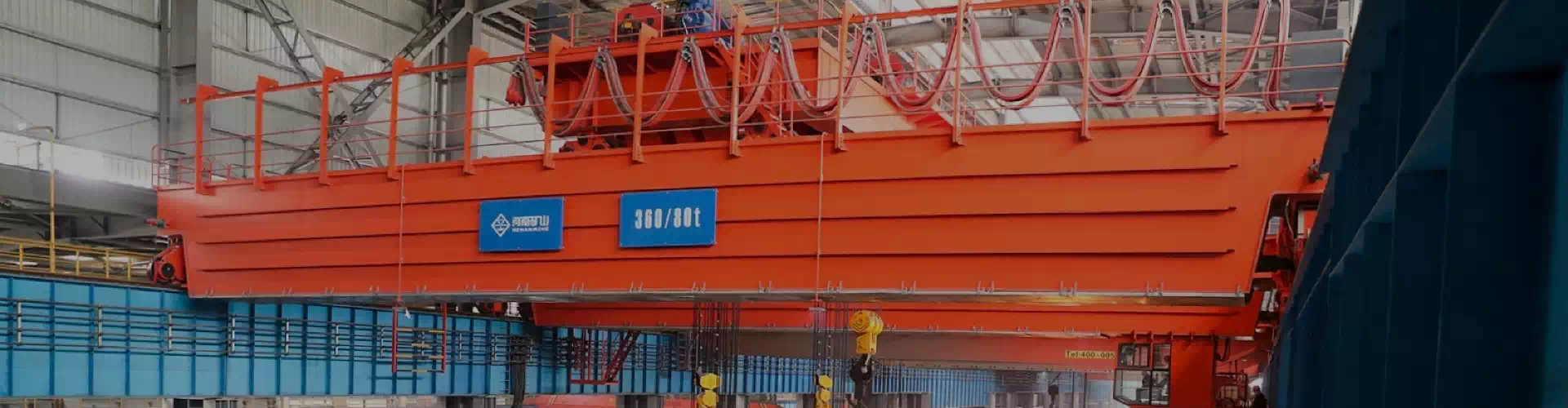
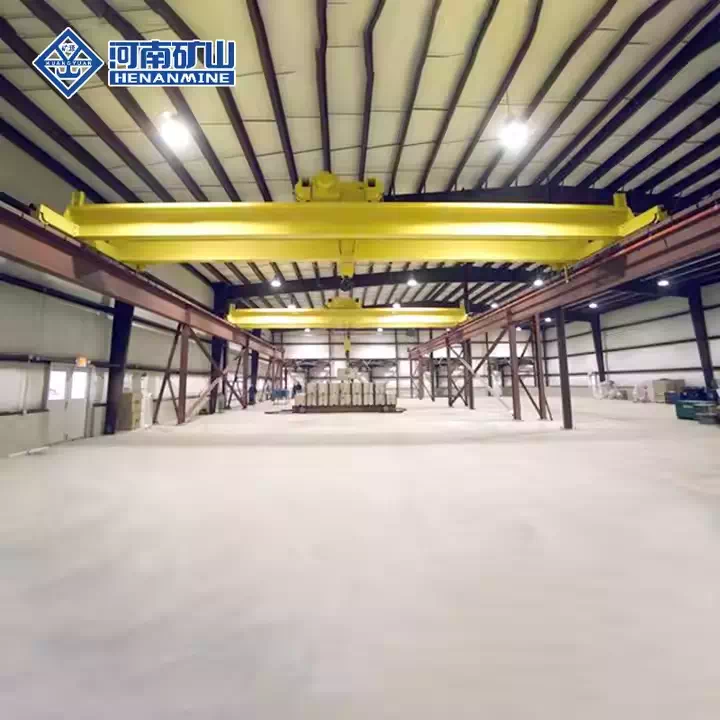
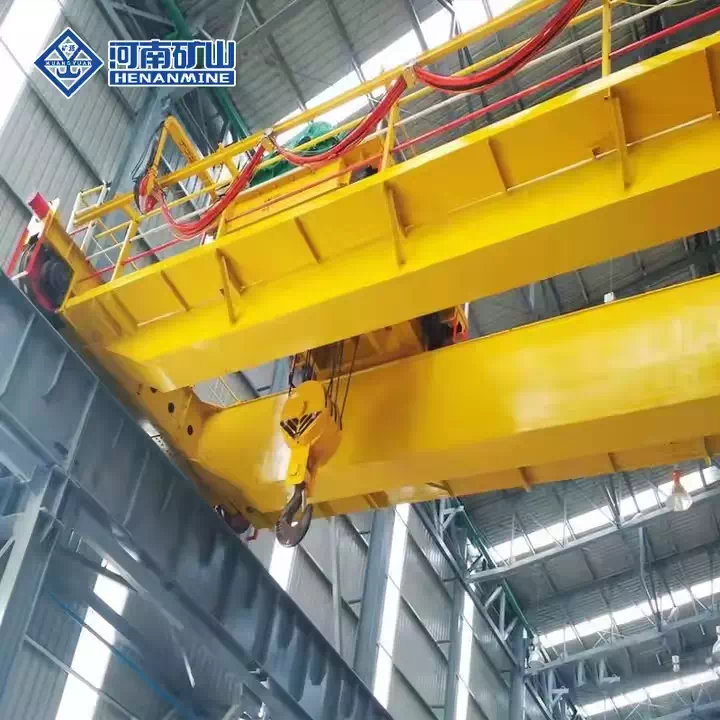
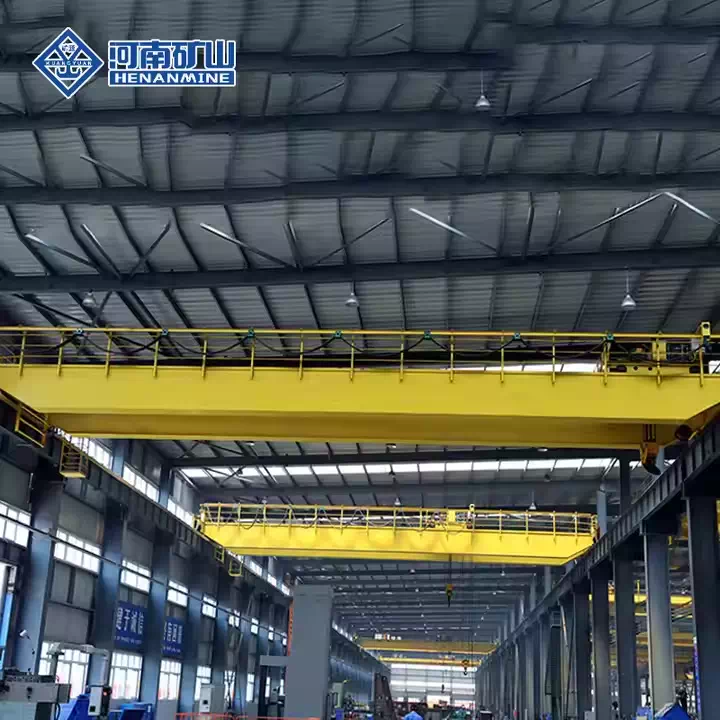
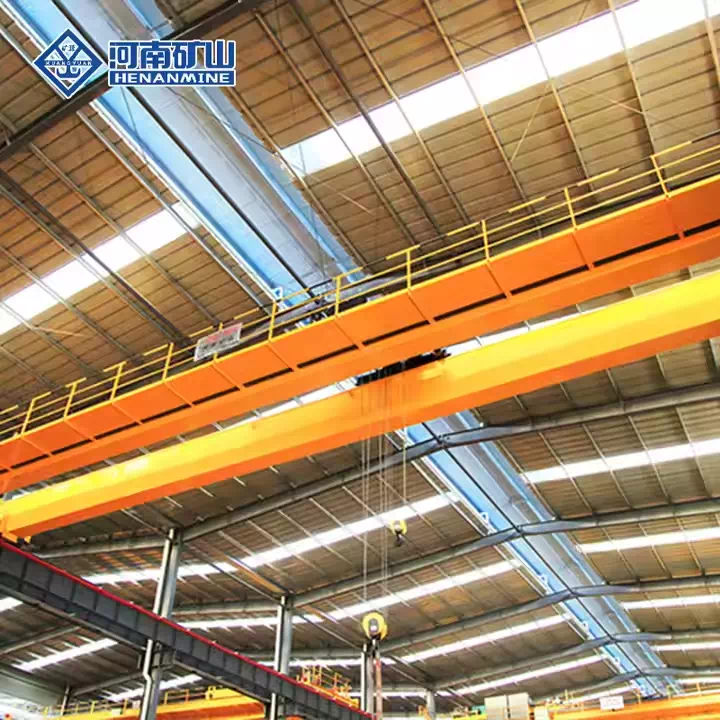
The QY Series Insulated Double Girder Overhead Crane is designed for lifting operations in workplaces where electrical insulation is required. It uses insulation components at several key connection points to reduce the risk of current being conducted through the crane's metal structures. Compared with a standard double girder overhead crane, this insulated overhead crane provides additional electrical isolation at the hook assembly, hoisting mechanism, and trolley structure.
It is also suitable for applications requiring a double girder overhead crane with an insulated hook, with the insulation design customized according to the actual working conditions and equipment structure.
Multi-Point Insulation Design
Why does an insulated overhead crane need insulation at multiple points? During lifting operations, if the load or nearby equipment carries current, the current may travel through connected metal components. Without suitable insulation, it may be conducted from the hook assembly to the hoisting mechanism, trolley frame, and main girder.
To reduce this risk, the QY insulated double girder overhead crane uses a multi-point insulation design at key connection positions. The insulation structure is arranged according to the actual mechanical connections and electrical requirements.
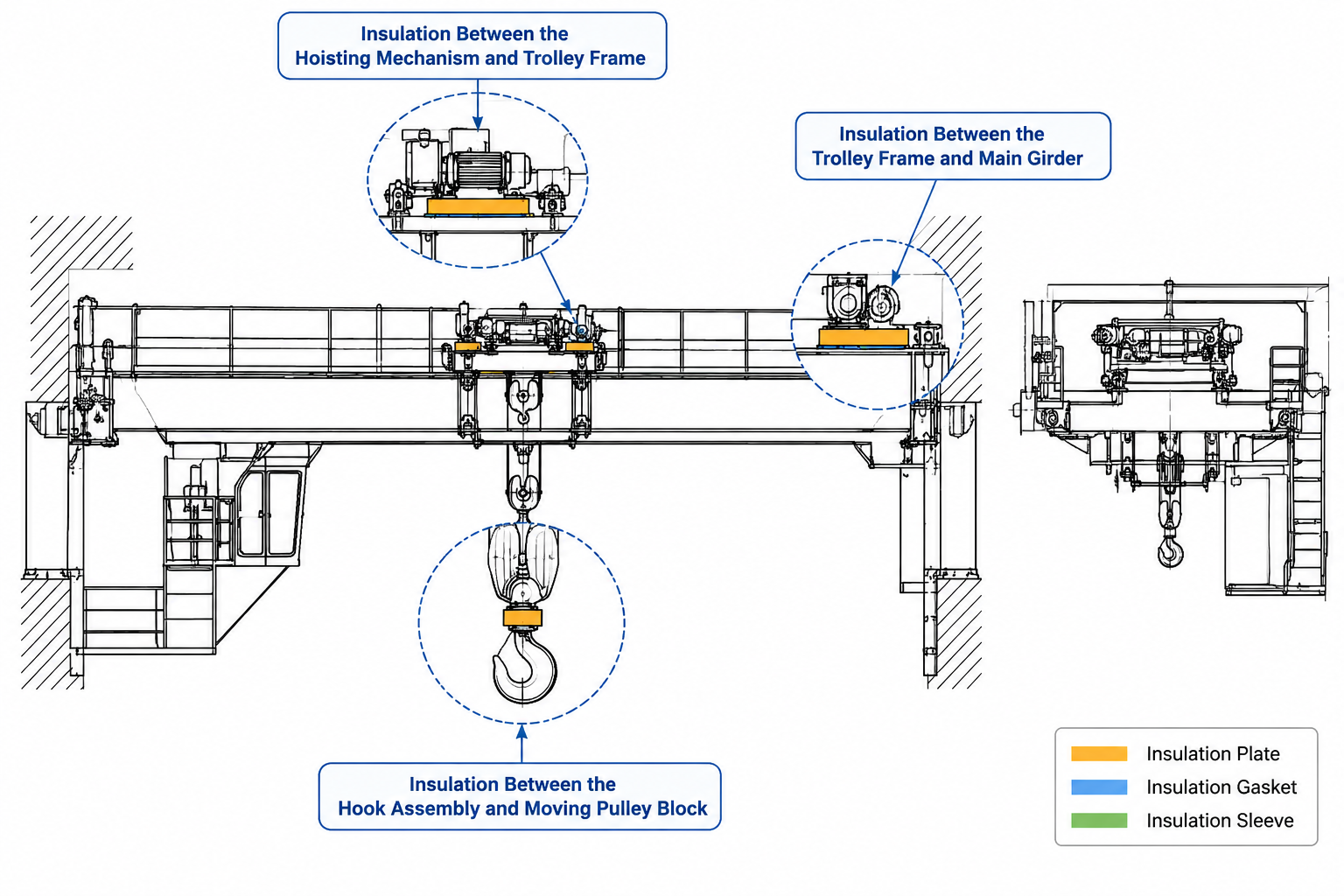
Insulation Between the Hook Assembly and Moving Pulley Block
The hook is the part that directly contacts the load, while the moving pulley block is connected to the hook assembly and works with the wire rope during lifting and lowering. If the load being lifted carries current, the current may travel upward through the metal parts of the hook assembly to the moving pulley block and the upper hoisting system, creating a potential electrical safety risk.
Therefore, insulation components, such as insulation gaskets or insulation sleeves, can be installed between the hook assembly and the moving pulley block. This helps reduce the risk of current passing through the metal connection between these two parts.
Insulation Between the Hoisting Mechanism and Trolley Frame
The hoisting mechanism is fixed to the trolley frame. Components such as the motor, gearbox, and drum are usually connected to mounting seats on the trolley frame with bolts. These metal components may form an electrical connection. If current travels from the hook assembly and moving pulley block below to the hoisting mechanism, it may then be conducted to the trolley frame.
Therefore, the QY insulated double girder overhead crane can be fitted with insulation components at the mounting connections between the hoisting mechanism and trolley frame. This helps reduce the risk of current spreading further through the trolley structure.
Insulation Between the Trolley Frame and Main Girder
The crane has two main girders, and the trolley moves horizontally along the rails installed on top of them. The trolley wheels run along these rails to move the load across the workshop.
On a standard double girder overhead crane, the trolley wheels, rails, and main girders are all metal components. If they are connected through continuous metal contact, they may form a path for current conduction. Once current reaches the trolley frame, it may travel through the rails to the main girders and other metal structures of the crane.
According to the actual trolley structure and insulation requirements, Mine Crane can install insulation components either between the trolley wheel box and trolley frame or between the rails and main girders. The specific insulation arrangement depends on the crane structure and the need to avoid other possible metal conduction paths.
Customized Insulation Components
An insulated double girder overhead crane does not use only one type of insulation component. Different installation positions have different connection structures, mechanical loads, and insulation requirements, so the insulation components may also vary.
Mine Crane can select and customize suitable insulation components according to your working conditions, equipment structure, and electrical requirements.
1. Insulation Plate
An insulation plate is used to separate the connection surfaces of two metal structures. For example, it can be installed between the hoisting mechanism and trolley frame, or between the rails and main girders.
2. Insulation Gasket
An insulation gasket is installed between bolted connection surfaces or component contact surfaces. It helps reduce direct metal-to-metal contact and the formation of conductive paths.
3. Insulation Sleeve
An insulation sleeve is installed around bolts or other metal fasteners. It helps reduce electrical contact between metal fasteners and the connected metal structures.
Note: These insulation components can be used separately or in combination, depending on the actual structure. You do not need to decide which type of insulation component to use by yourself. Simply provide us with the crane structural drawings, site electrical conditions, and relevant technical requirements. Mine Crane will select and design a suitable customized insulation solution for your application, taking both electrical insulation requirements and mechanical connection strength into consideration.
Technical Parameters
Item |
Unit |
QY-10 |
QY-16/3.2 |
QY-20/5 |
QY-32/8 |
Model |
QY Type |
QY Type |
QY Type |
QY Type |
|
Rated Lifting Capacity |
t |
10 |
16/3.2 |
20/5 |
32/8 |
Span S |
m |
10.5–34.5 |
10.5–34.5 |
10.5–34.5 |
10.5–34.5 |
Max. Lifting Height – Main Hook |
m |
18 |
18 |
14 |
16 |
Max. Lifting Height – Auxiliary Hook |
m |
— |
20 |
16 |
18 |
Work Class |
A6 |
A6 |
A6 |
A7 |
|
Main Hoisting Speed |
m/min |
12.5 |
11.2 |
10.2 |
8.5 |
Auxiliary Hoisting Speed |
m/min |
— |
16.2 |
17.0 |
13.8 |
Trolley Traveling Speed |
m/min |
39.5 |
42.0 |
42.0 |
35.0 |
Crane Traveling Speed |
m/min |
85.5 (91.2) |
82.3 (88.6) |
82.3 (88.6) |
72 (78) |
Recommended Rail |
43 kg/m / QU70 |
43 kg/m / QU70 |
QU70 |
QU80 |
|
Power Supply |
AC 3-phase, 380 V, 50 Hz; custom voltage and frequency available |
||||
Insulation Class |
Class F / Class B |
Class F / Class B |
Class F / Class B |
Class F / Class B |
Product Features
1. Insulated Hoisting System
The hoisting system not only performs lifting operations but also includes insulation components at specific connection points. This helps reduce the risk of current being conducted through the metal parts of the hoisting system while maintaining normal lifting functions.
2. Reliable Double Girder Structure
The two main girders and other load-bearing components are designed according to the lifting capacity, span, and work class. The installation requirements of the insulation components are also considered to ensure that the insulation design is compatible with the overall mechanical structure of the crane.
3. Smooth Lifting and Traveling
The lifting and traveling speeds can be selected according to the actual working conditions. Different control options are available, including a wired pendant control, radio remote control, and cabin control. A variable frequency drive (VFD) can also be selected when required to improve starting and stopping performance and make crane operation smoother.
4. Insulation Inspection and Maintenance
The insulation components need to be checked regularly. Inspect the insulation plates, insulation gaskets, and insulation sleeves for looseness, cracks, aging, or surface contamination. Insulation performance should also be tested according to the equipment's technical requirements. Damaged or deteriorated insulation components should be repaired or replaced in time.
FAQ
Q: How Is the Insulation Performance of an Overhead Crane Tested?
A: The insulation performance of an overhead crane should be checked through regular visual inspections and professional electrical testing.
During routine inspections, check the three key insulation areas: the hook assembly and moving pulley block, the hoisting mechanism and trolley frame, and the trolley frame and main girder. Look for cracks, looseness, aging, dust, or other surface contamination on the insulation components.
When necessary, qualified personnel should use an insulation resistance tester (megohmmeter) to check the relevant sections according to the equipment's technical requirements. Keep the insulation components clean and dry, and remove conductive dust in time. If an insulation component is damaged or its performance has deteriorated, it should be repaired or replaced. Power-frequency withstand voltage tests should only be carried out by qualified professionals.
Q: Can an Insulated Double Girder Overhead Crane Be Used in an Aluminum Electrolysis Workshop?
A: Yes. During aluminum electrolysis, the electrolytic cells and related equipment involve high-current DC electricity. If an unintended conductive path forms between the crane and energized components, it may create electrical safety risks, including electric shock or electrical arcing.
The QY insulated overhead crane is fitted with insulation components at key connection points to reduce the risk of current being conducted through the crane's metal structures. The insulation design should be customized according to the electrical conditions, lifting tasks, and installation environment of the aluminum electrolysis workshop.
Q: How Soon Can Mine Crane Deliver Replacement Spare Parts?
A: Mine Crane has spare parts agents in key markets around the world, including Germany, the United States, Malaysia, and the UAE. For customers in nearby countries and regions, spare parts can be delivered within 72 hours after an order is placed, helping ensure timely parts supply and reduce equipment downtime.
Q: Can Mine Crane Customize the Insulation Design of an Overhead Crane?
A: Yes. Mine Crane is a professional crane manufacturer in China with dedicated design and production teams. We can customize the insulation design according to your site conditions, crane structure, and electrical requirements. This includes selecting and arranging insulation positions, insulation plates, insulation gaskets, and insulation sleeves.
You only need to provide the equipment structural drawings and relevant technical requirements. Our team can then develop a suitable insulation solution for your application, taking both electrical insulation requirements and mechanical connection strength into consideration.
The crane is applicable to aluminum and magnesium smelting factories. QY model insulating overhead crane is widely used in electrolyzing of nonferrous metal, aluminum and magnesium metallurgy workshops.