

LDC electric single-girder crane


- A5
-

 Lifting hook
FEATURED PRODUCTS
-
 Double Girder Heavy Duty Ladle CraneApply: The main hook employs the constant-spacing connecting traverse as the load handling device to hoist steel ladle and the auxiliary hook acts in concert with the main hook to accomplish pouring of molten steel and steel slag, and other auxiliary hoisting.LEARN MORE

-
 U typed Double Girder Hook Gantry CraneApply: The machine is suitable for railway freight yards, ports, open warehouses, container transfer stations, etc. with large span and frequent loading and unloading operations.LEARN MORE
-
 Hang Beam Double Girder Overhead CraneApply: The crane is suitable for loading, unloading and handling steel plates, section steels,coils and other materials in indoor or outdoor fixed spans of steel plants, shipyards, ports, storage yards and warehouses.LEARN MORE
-
 L typed Single Girder Hoist Gantry Crane with a hoistApply: L type single girder gantry crane with hoist is applied for handling and convey operation outdoors, or at warehouse, stock ground, railway station, sea port cargo area, etc.LEARN MORE
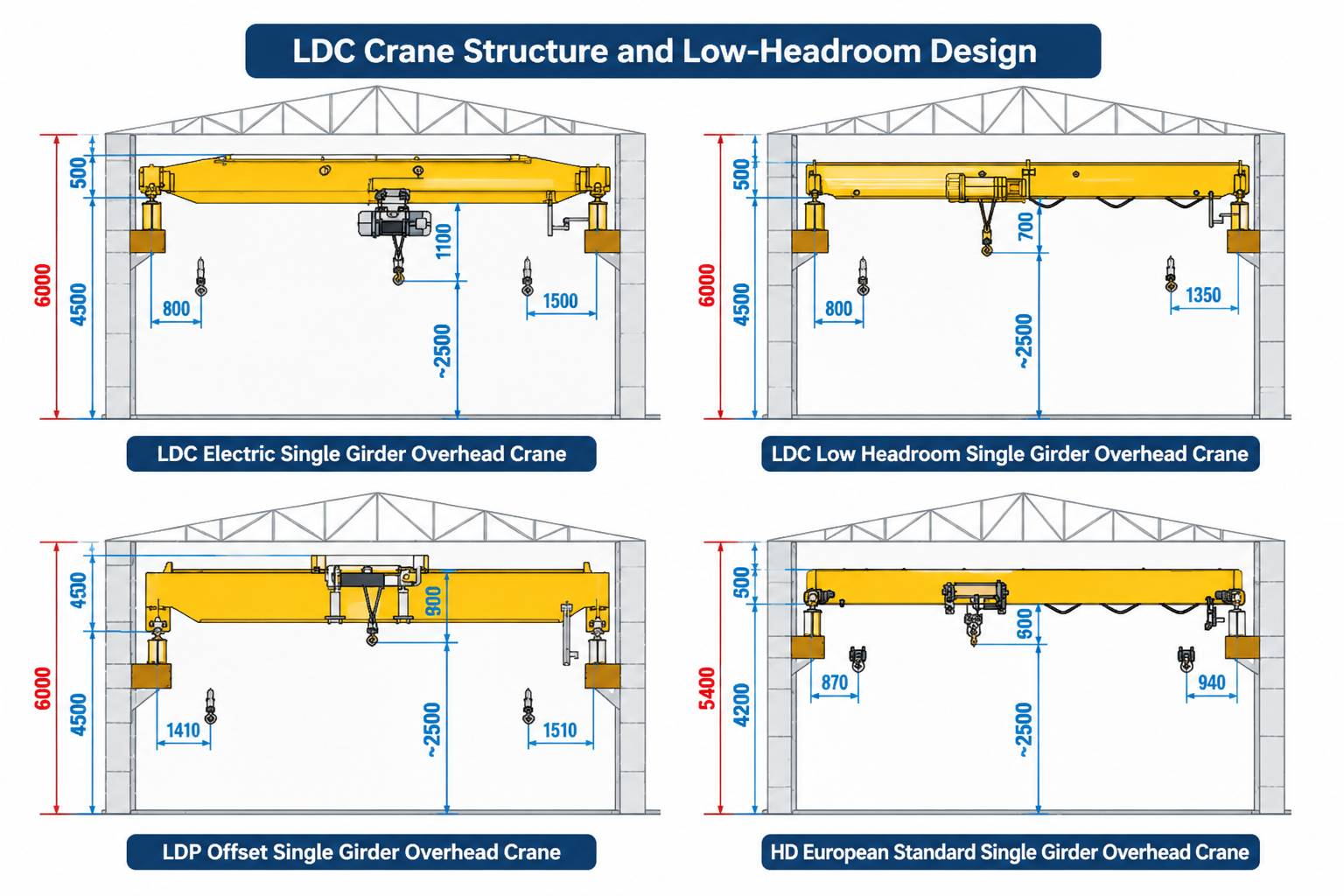
The LDC electric single girder overhead crane consists of a box-section main girder, low-headroom electric hoist, partial-suspension trolley frame and low-headroom structural assembly. By optimizing the relative positions of the electric hoist, trolley and main girder, this crane makes fuller use of vertical space and delivers a greater effective hook lifting height under proper installation conditions. It is suitable for applications where the workshop height is limited yet a higher lifting stroke is required.
As a crane manufacturer, we use robotic welding in the production of crane girders to improve welding consistency and manufacturing precision. Compared with relying entirely on manual welding, automated welding helps maintain more consistent welding parameters and repeatable weld paths. Combined with appropriate quality inspections, this process helps support the structural quality and long-term service performance of the crane.
Why Is the LDC Overhead Crane Suitable for Low-Clearance Workshops?
In a conventional single girder overhead crane, the electric hoist is generally installed beneath the main girder. The space occupied by the hoist and trolley can limit the available lifting height, particularly in workshops with low ceilings or existing building structures that are difficult to modify.
The LDC electric single girder crane uses a specially arranged hoisting and trolley system to reduce the vertical space occupied by the lifting equipment. Depending on the specific design, the hoist and trolley can be positioned closer to or partially alongside the main girder, allowing the available headroom to be used more efficiently.
This low-headroom design can be beneficial when an existing workshop needs additional usable hook height without major modifications to the building structure. Before selecting a crane, the runway elevation, roof structure, hoist dimensions, and required hook travel should be checked to confirm the actual lifting height available.
LDC Crane Structure and Low-Headroom Design
Robotic Welding and Quality Control
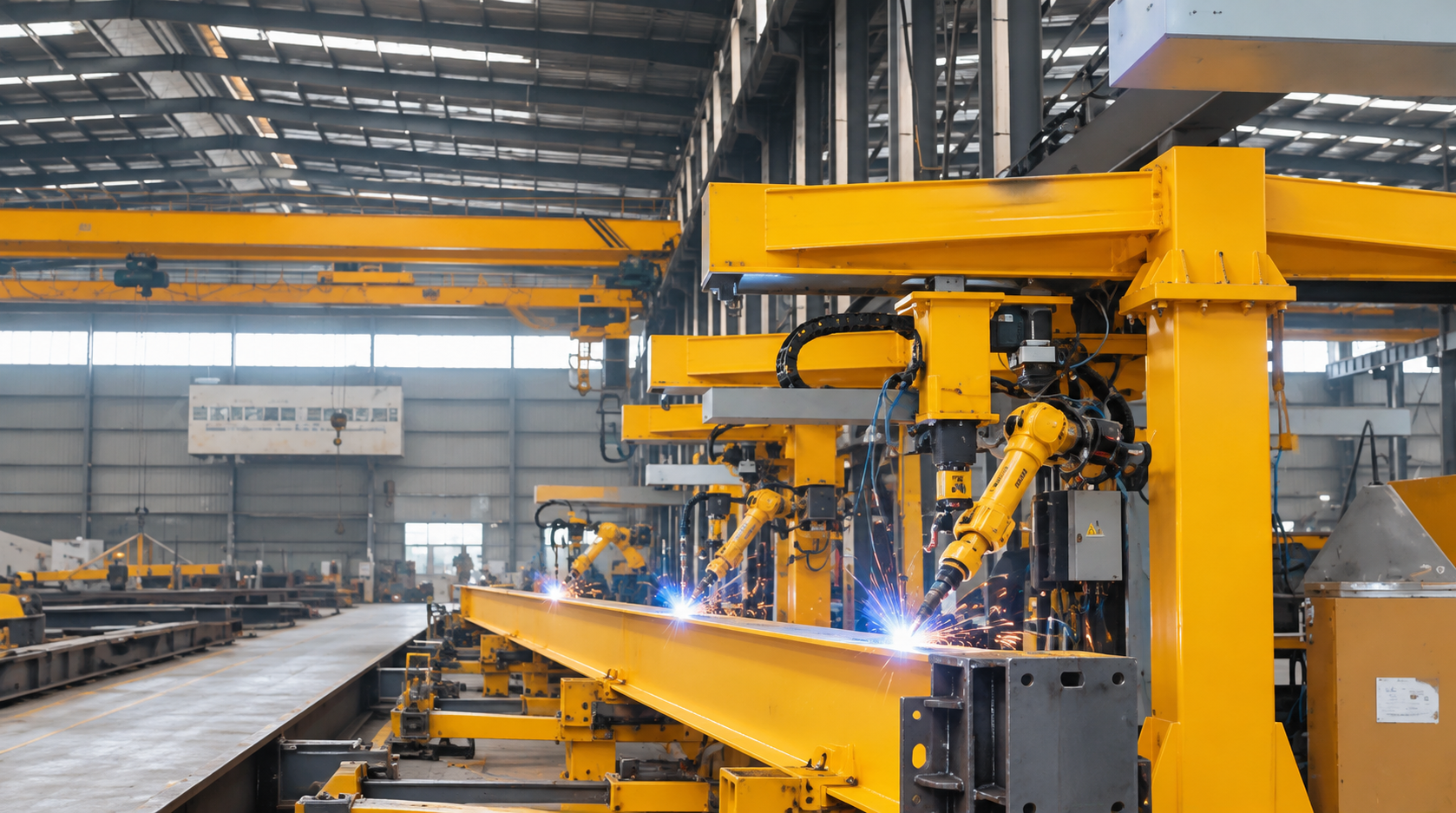
At Mine Crane, robotic welding is used for designated structural components, including crane girders and end carriages, where the production process and component geometry are suitable for automation.
Welding parameters and robot movements can be controlled more consistently than in processes that rely entirely on manual operation. This helps improve weld repeatability and reduce variations caused by differences in manual welding techniques. However, the final weld quality also depends on material preparation, joint fit-up, welding procedures, and process control.
Where required by the applicable standards and inspection plan, specified welds can be examined using ultrasonic testing (UT) or other suitable non-destructive testing methods. If a non-conforming area is identified, it should be assessed and repaired in accordance with the relevant procedure, followed by reinspection as required.
For crane buyers, robotic welding combined with documented quality control provides a more meaningful basis for evaluating manufacturing quality than the use of automation alone.
Key Advantages of the LDC Single Girder Overhead Crane
1. Safety Features for Controlled Operation
The LDC single girder overhead crane can be equipped with safety devices such as overload protection, emergency stop controls, bridge and trolley travel limit switches, and buffers, depending on the design and project requirements.
These devices serve different purposes. Overload protection helps prevent lifting beyond the permitted capacity, while travel limit switches help restrict movement at designated positions. Buffers help reduce the impact when moving equipment reaches its designed travel limit.
The final safety configuration should be selected according to the applicable regulations, operating environment, and required crane specifications.
2. Easier On-Site Installation
Where applicable, connection holes can be accurately machined or pre-drilled during factory production according to the approved drawings. This helps improve alignment between connecting components and reduces the need for additional on-site drilling.
For installation projects, the connection dimensions, mounting positions, and site conditions should be verified before manufacturing. Proper preparation can help reduce fitting adjustments and shorten installation time, although the actual installation requirements depend on the crane design and site layout.
3. Consistent Structural Quality for Long-Term Use
The service life of a crane depends on several factors, including structural design, material quality, welding workmanship, inspection procedures, operating duty, and maintenance.
Robotic welding helps improve the repeatability of designated welds, while appropriate inspection procedures help identify defects that do not meet the specified acceptance criteria. Together, these measures support structural quality and help reduce the risk of problems associated with unacceptable weld defects.
Regular inspection, correct operation, and maintenance according to the manufacturer's recommendations remain essential for reliable long-term service.
4. Better Use of Available Workshop Headroom
For workshops where building height is limited, a low-headroom overhead crane can help make better use of the existing vertical space. This may be particularly useful for factory renovation projects where raising the roof or extensively modifying the supporting structure would be costly or impractical.
The actual benefit should be evaluated by comparing the required hook height with the available headroom, runway elevation, and hoist configuration. A site-specific assessment helps determine whether an LDC crane is suitable for the intended lifting task.
LDC electric single girder overhead cranes are suitable for industrial workshops where building height is limited but a certain lifting height is still required.
Typical applications include machinery manufacturing workshops, equipment assembly areas, production lines, and warehouses. In these workplaces, the low-headroom hoisting arrangement can help make better use of the available vertical space, especially when the existing building structure is difficult or expensive to modify.
For existing workshop renovation projects, the available runway height, required hook height, and surrounding obstacles should be checked before selecting an LDC crane.
FAQ
Q1: Can the LDC electric single girder overhead crane be customized?
Yes. The crane can be configured according to project requirements and available design options. Please provide details such as the materials to be lifted, rated lifting capacity, span, lifting height, operating frequency, and any special environmental or installation requirements. These details help us evaluate a suitable crane configuration.
Q2: Are you a distributor or a crane manufacturer?
We are a crane manufacturer based in Changyuan, Henan, China, a region known for its lifting equipment industry. Customers are welcome to visit our factory to learn more about our manufacturing facilities, production processes, and quality control procedures.
Q3: What is the difference between LDC and LDP electric single girder overhead cranes?
The main difference depends on the hoist and trolley arrangement used in each design.
In the configurations described by our product range, the LDC uses a low-headroom hoisting arrangement positioned close to the main girder, while the LDP uses an offset trolley arrangement mounted toward one side of the girder.
These configurations can affect the available headroom, hook approach, and usable lifting space. The exact structural differences should be confirmed using the corresponding product drawings, since model designations and configurations may vary between manufacturers.


