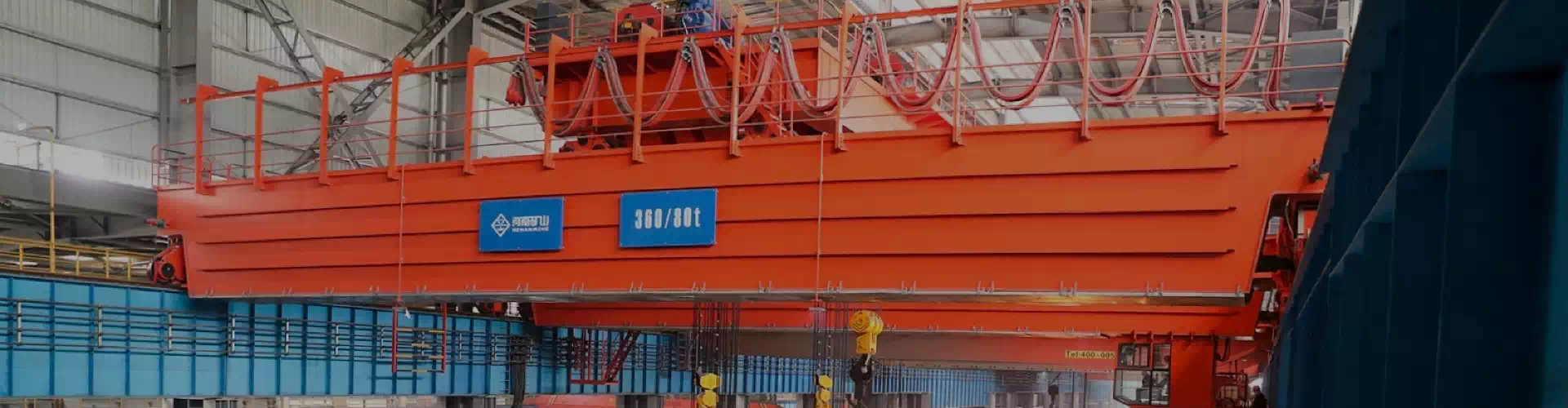
Double Girder Electromagnetic Overhead Crane
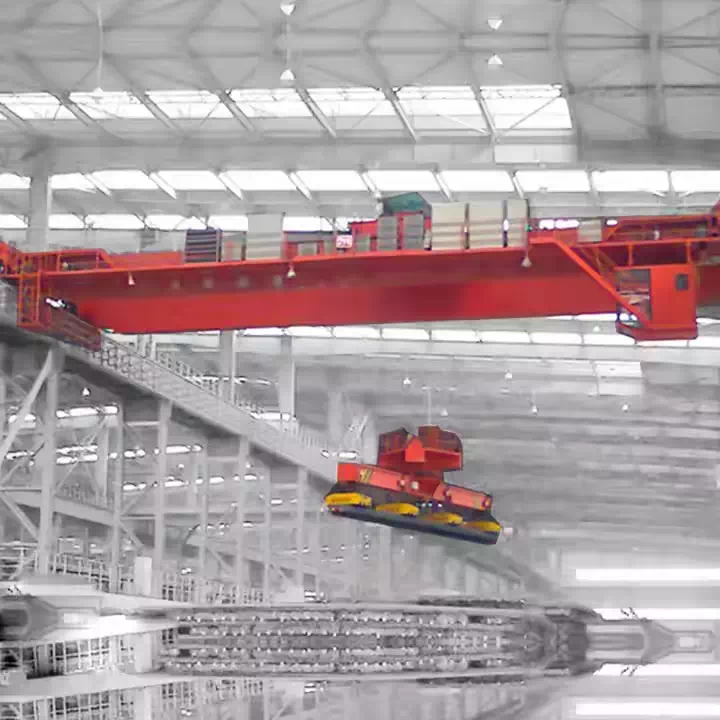


- A6
-

 Magnetic chuck
FEATURED PRODUCTS
-
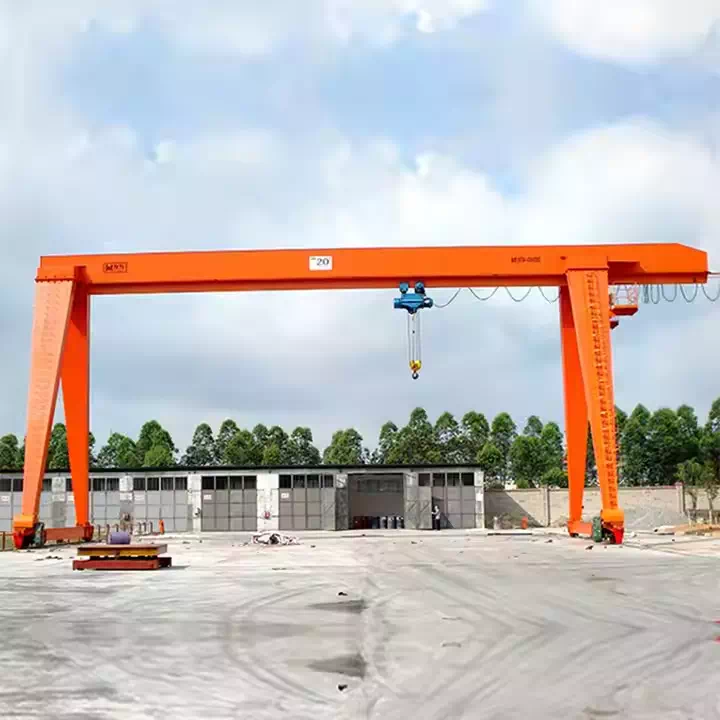 A typed Single Girder Hoist Gantry CraneApply: This product is widely used at open ground and warehouses to load,unload or grab materials.LEARN MORE

-
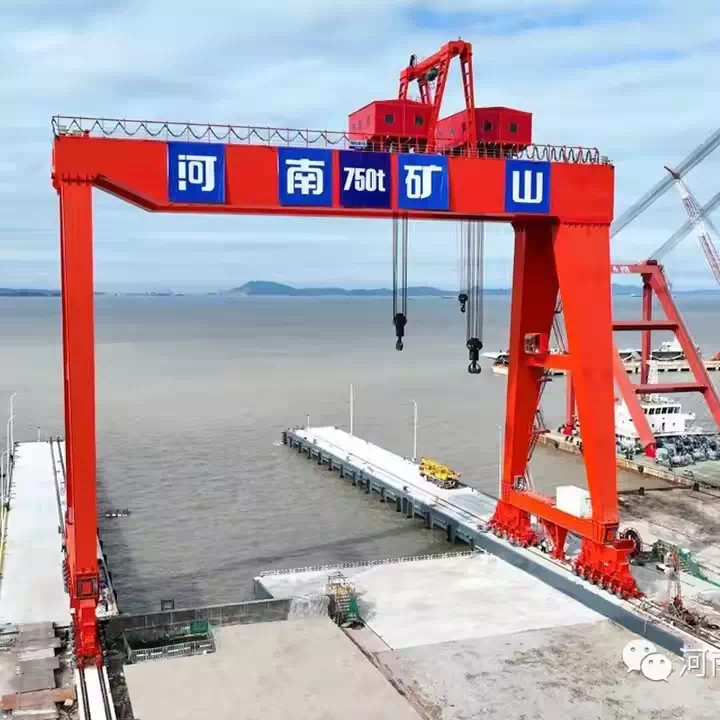 Shipyard CraneApply: Shipyard Crane is special for fragmented transport, end-to-end jóoint and turning operation of large ship hulls.LEARN MORE
-
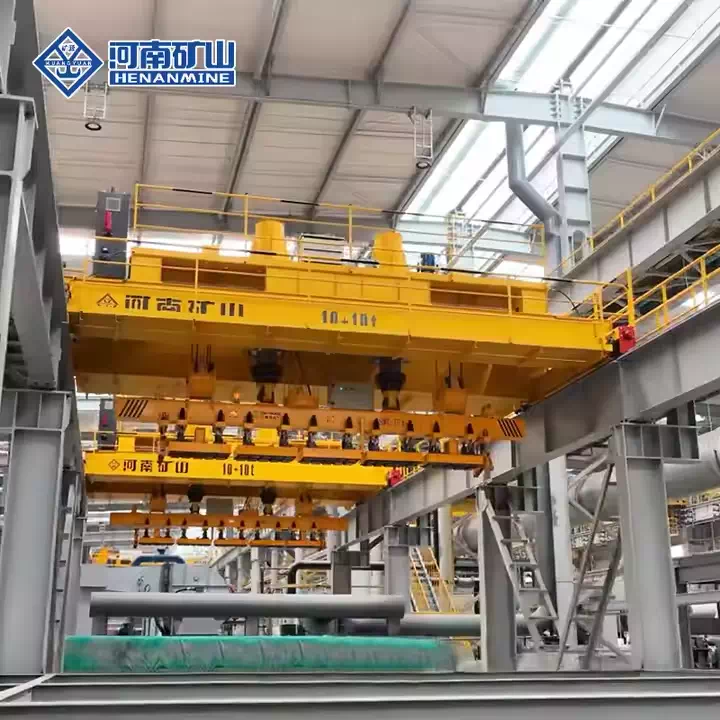 Hang Beam Double Girder Overhead CraneApply: The crane is suitable for loading, unloading and handling steel plates, section steels,coils and other materials in indoor or outdoor fixed spans of steel plants, shipyards, ports, storage yards and warehouses.LEARN MORE
-
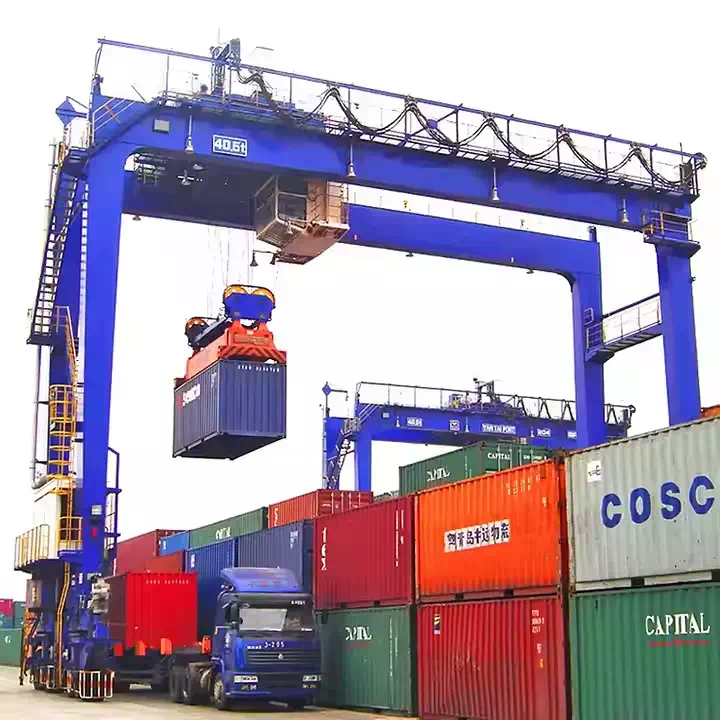 Rubber Tyre Container CraneApply: Rubber-tyred Container Gantry Cranes are applicable to remove, load and unload international standard containers.LEARN MORE
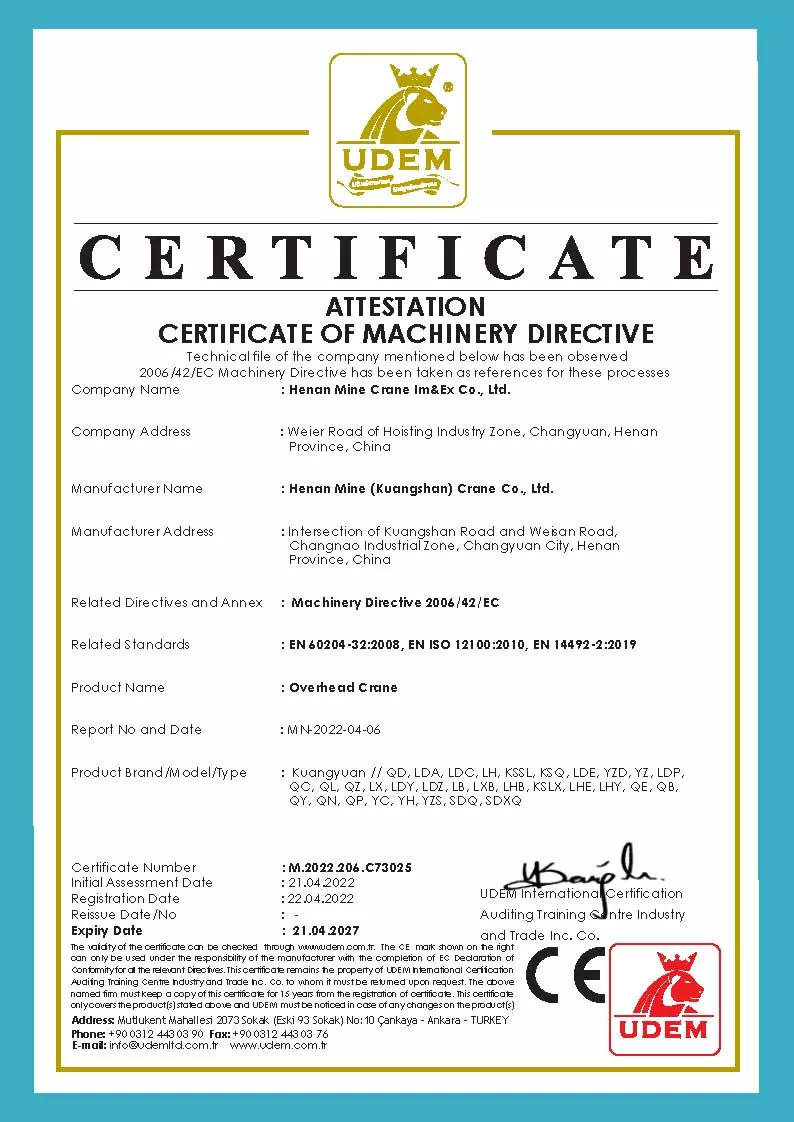
bridge structure, lifting trolley, electromagnetic lifting device, electrical control system, and safety protection devices. It is a specialized overhead crane for metallurgical applications, with CE/ISO certification and third-party inspection.
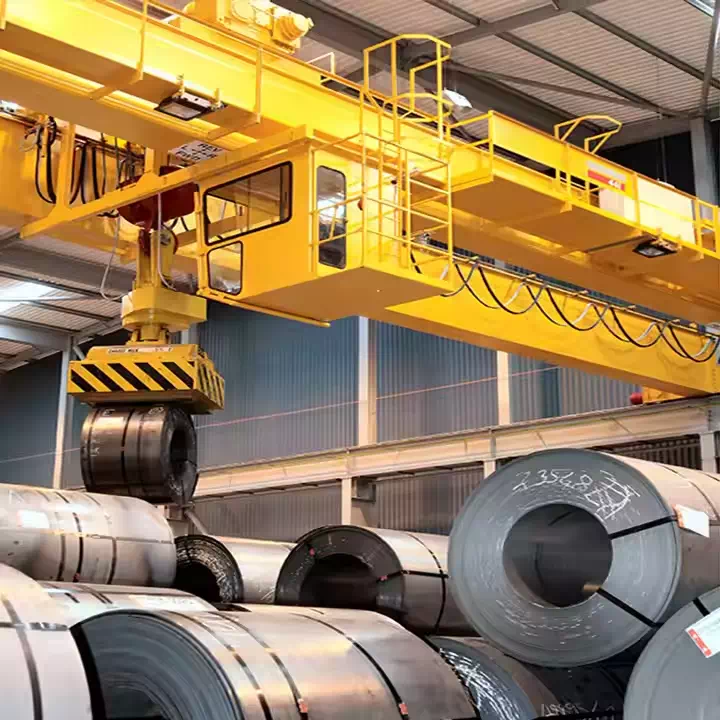
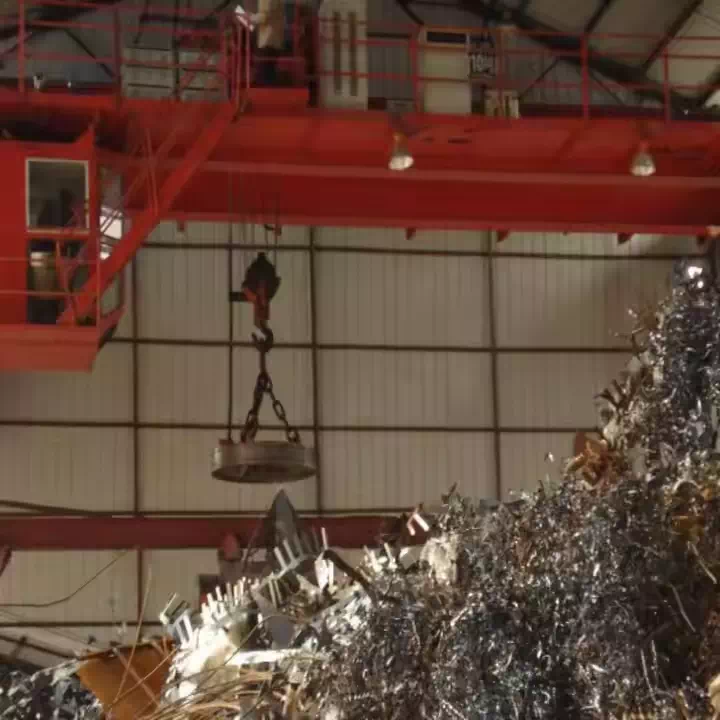
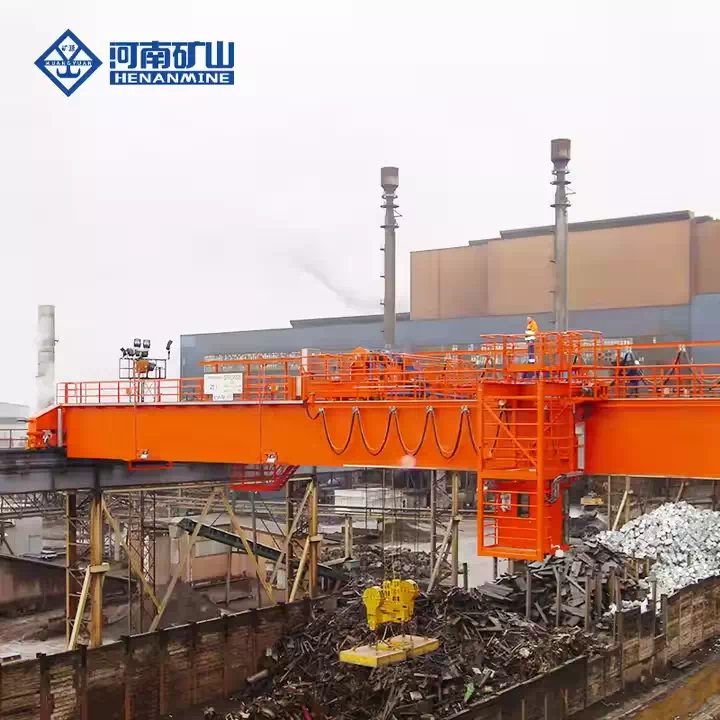
It is commonly used to handle steel products such as steel plates, billets, bars, coils, scrap steel, and other ferromagnetic materials.
Mine Crane can configure different types and quantities of electromagnetic lifting magnets or electromagnetic lifting beams according to the dimensions, weight, and handling requirements of the materials. This allows the lifting system to match different steel handling tasks rather than relying on a fixed magnet arrangement.
Working Principle of Double Girder Electromagnetic Overhead Crane
1. Generating Magnetic Force
An electromagnetic lifting magnet contains an excitation coil and an iron core. When the operator presses the magnetization button, an electric current passes through the coil and generates a magnetic field. The iron core becomes magnetized, creating magnetic force on the bottom surface of the magnet.
This magnetic force attracts ferromagnetic materials such as steel plates, billets, and bars.
2. Lifting and Transportation
After confirming that the material is securely attached, the operator starts the hoist or other lifting mechanism to raise the electromagnetic magnet together with the steel material.
The crane's bridge travel and trolley travel mechanisms then move the load to the designated position. The magnet configuration and lifting capacity need to match the material's weight, dimensions, and distribution to ensure stable handling.
3. Demagnetization and Unloading
Once the load reaches the designated position, the operator activates the demagnetization function through the control system.
The magnetic force between the electromagnetic lifting magnet and the steel material is released, allowing the material to be placed at the required location.
4. Safety Protection in Case of Sudden Power Failure
If the main power supply is suddenly interrupted, an electromagnetic overhead crane equipped with a power-off magnetic retention system and backup power supply can automatically switch to the backup power source.
The backup system maintains the excitation state of the electromagnetic lifting magnet, helping prevent the lifted steel material from falling due to a sudden loss of power.
The actual magnetic retention time depends on the backup power capacity, magnet power consumption, and operating conditions.
Double Girder Electromagnetic Overhead Crane Specifications
|
|
Parameter |
Description |
Crane Type |
Double Girder Overhead Crane |
Lifting Device |
Electromagnetic Chuck / Electromagnetic Lifting Beam |
Lifting Material |
Steel Plates, Billets, Bars, Coils, Scrap Steel |
Magnet Control |
Independent / Group Control (Optional) |
Power Supply |
Cable Festoon System |
Emergency Power Supply |
20 minutes (Optional) |
Control Mode |
Cabin Control/Radio Remote Control/ Wired Pendant Control |
Safety Protection |
Overload Protection, Limit Switches, Emergency Stop |
The specifications above are reference configurations. The final design can be adjusted according to the lifting requirements, workshop conditions, and customer specifications.
What Can Be Customized for Your Electromagnetic Overhead Crane?
Different steel products require different lifting arrangements. For example, a short steel billet and a long steel plate may have the same weight but require different magnet shapes, quantities, and lifting point arrangements.
Mine Crane provides customized electromagnetic overhead crane solutions based on the actual material dimensions, lifting weight, temperature, working frequency, and site conditions.
1. Electromagnetic Lifting Device Customization
Electromagnetic Magnet Shapes
Mine Crane provides electromagnetic lifting solutions for both regular and irregular workpieces.
Common magnet shapes include round, square, rectangular, and elliptical designs. Non-standard designs, such as curved, polygonal, and specially shaped pole faces, can also be customized to match different steel products, coils, profiles, and castings.
The magnet's contact surface should match the shape of the material as closely as possible. A suitable contact area helps improve magnetic attraction and maintain stable lifting, especially when handling irregularly shaped workpieces.
Single Electromagnetic Lifting Magnet or Electromagnetic Lifting Beam?
Based on the structure and load-bearing arrangement of the electromagnetic lifting device, the crane can be configured with either a Single Electromagnetic Lifting Magnet Configuration or an Electromagnetic Lifting Beam Configuration.
Single Electromagnetic Lifting Magnet Configuration
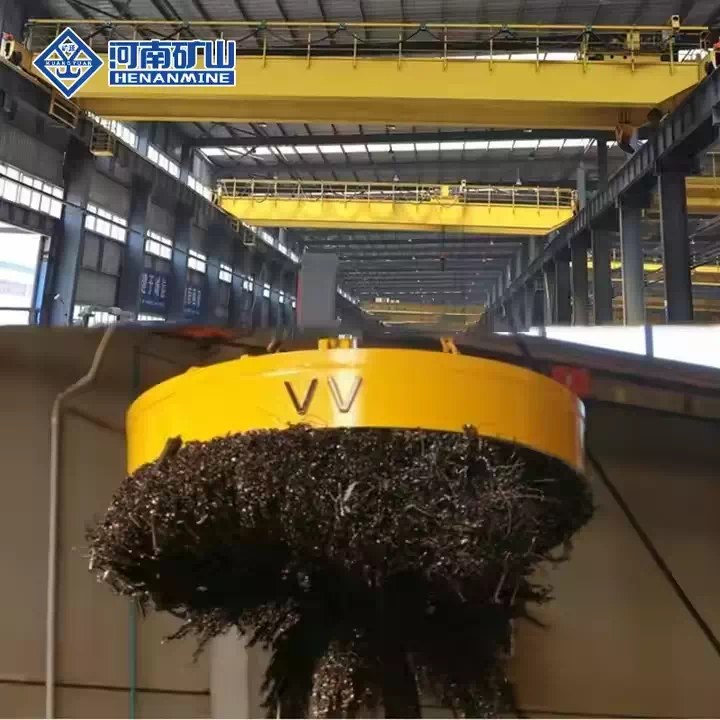
This is a relatively straightforward arrangement. A single electromagnetic lifting magnet is connected to the lifting mechanism through a hook or dedicated suspension device. The magnet directly contacts and attracts the material.
It is suitable for handling materials that can be safely lifted using a single magnet and an appropriate contact area.
Electromagnetic Lifting Beam Configuration
An electromagnetic lifting beam uses one or more electromagnetic lifting magnets to attract the material. The lifting beam is installed below the hoisting mechanism, with the magnets arranged underneath according to the lifting requirements.
By adjusting the positions and spacing of multiple magnets, several lifting points can work together to attract and transport the material.
This configuration is generally designed in an elongated shape and is suitable for handling long steel plates, billets, structural steel sections, and other large steel products.
Different electromagnetic lifting beam configurations are available according to the required handling method, including:
Non-Rotating Electromagnetic Lifting Beam
Rotating Electromagnetic Lifting Beam
Telescopic Electromagnetic Lifting Beam
Adjustable-Spacing Electromagnetic Lifting Beam
Group-Controlled Electromagnetic Lifting Beam
The appropriate design depends on the material dimensions, lifting points, required rotation or adjustment functions, and actual operating process.
Number of Electromagnetic Lifting Magnets
Mine Crane supports customized magnet quantities and arrangements. The number and layout of electromagnetic lifting magnets can be determined according to the lifting weight, material length, width, thickness, and center of gravity.
Generally, a single or double magnet arrangement may be suitable for short materials and smaller workpieces. For long steel plates, structural steel sections, and wide plates, multiple magnets can be arranged to lift the material simultaneously.
A properly designed multi-magnet arrangement helps distribute the load more evenly, reducing the risk of plate bending and uneven force distribution between individual magnets.
The magnet spacing is also important. If the magnets are positioned too far apart or do not match the material's dimensions, some lifting points may carry excessive loads while others may not provide sufficient support.
Electromagnetic Magnet Control
When the crane is equipped with multiple electromagnetic lifting magnets, the control system can be designed for independent control or group control.
Independent control allows individual magnets to be operated separately, while group control allows selected magnets to work together.
Mine Crane designs the appropriate control arrangement according to the number of magnets, lifting beam structure, material dimensions, and actual lifting process.
For example, different magnet groups may be controlled separately when handling materials of different lengths or when the lifting arrangement requires different combinations of magnets.
High-Temperature Adaptation
Without high-temperature protection, the electromagnetic overhead crane and its lifting magnets are generally suitable for ambient temperatures of -20°C to +40°C, with a maximum workpiece temperature of 100°C or below.
However, many steel handling applications involve high-temperature materials, such as steel billets and hot-rolled steel plates, whose actual temperatures may be much higher than 100°C.
For these applications, Mine Crane can customize high-temperature electromagnetic lifting magnets according to the actual material temperature and workshop ambient temperature.
Suitable coil insulation materials and structural designs are selected to withstand the required operating temperatures.
When selecting a high-temperature electromagnetic lifting magnet, it is important to provide the actual surface temperature of the material, the temperature inside the workshop, and the expected lifting frequency. These factors help determine the appropriate magnet design and thermal protection requirements.
2. Basic Crane Parameters
Common crane parameters, including rated lifting capacity, span, lifting height, lifting speed, travel speed, and duty class, can all be customized.
However, these parameters should not be selected independently. They need to be considered together with the crane structure, load conditions, operating frequency, and installation requirements to ensure that the final electromagnetic overhead crane design is practical and suitable for the actual application.
3. Electrical and Control System Customization
VFD Control
A variable frequency drive (VFD) system adjusts the lifting and travel speeds of the crane. It helps reduce impact caused by sudden starting and stopping, making the double girder electromagnetic overhead crane operate more smoothly.
VFDs can be configured separately for the hoisting mechanism, trolley travel mechanism, and bridge travel mechanism. Alternatively, different combinations can be selected according to the customer's operating requirements.
This is particularly useful for applications that require frequent positioning, controlled acceleration, or more precise load handling.
PLC Control System
When a double girder electromagnetic overhead crane operates in a steel warehouse, the customer may require the crane to move along preset routes, automatically proceed to the next operation after completing a lifting task, or trigger an alarm when abnormal conditions such as excessive temperature or equipment faults are detected.
For these automation requirements, Mine Crane can customize a PLC control system according to the customer's material handling process and actual site conditions.
Different operating sequences, operating conditions, and safety interlock logic can be designed.
For example, depending on the actual equipment configuration, the system can support preset route operation, continuous lifting task control, abnormal condition monitoring, and alarm functions.
These functions help reduce repetitive manual operations, improve material handling efficiency, and enhance operational safety.
Control Mode Customization
Mine Crane can provide different control modes according to the operating requirements, including radio remote control, wired pendant control, and cabin control.
For applications that require flexible operation, radio remote control and cabin control can also be configured together, allowing operators to select the appropriate control method according to the working situation.
Power-Off Protection and Backup Power Supply
To address the risk of sudden power failure during electromagnetic lifting operations, Mine Crane can equip the electromagnetic overhead crane with a power-off magnetic retention system according to the customer's safety requirements.
When the main power supply is unexpectedly interrupted, the system automatically switches to the backup power supply to continue powering the electromagnetic lifting magnets and maintain their magnetic force.
This helps reduce the risk of lifted materials falling due to power failure and provides operators with additional time to take emergency measures.
With the standard optional configuration, the magnetic retention time can reach approximately 20 minutes.
If a longer retention time is required, Mine Crane can customize the backup power capacity according to the electromagnetic magnet power consumption, lifting weight, and on-site emergency requirements.
4. Customization for Special Working Conditions
Dust Protection
If the crane operates in an environment with high dust concentrations, Mine Crane can provide dust-protection options according to the site requirements.
These may include dust-resistant electrical components, motors, and sealing structures to reduce dust entering the equipment and lower the risk of equipment failure.
Anti-Sway System
If the material transportation distance is long or the crane needs to start and stop frequently during operation, an anti-sway system can be considered.
Mine Crane can optimize the bridge and trolley travel control logic through control algorithms to reduce load swinging during transportation.
This helps improve positioning accuracy and makes loading and unloading operations more stable and controlled.
Anti-Corrosion Treatment
If the working environment has high humidity, heavy salt spray, or corrosive gases, Mine Crane can customize the surface protection system according to the actual corrosion conditions.
The steel structure can receive different anti-corrosion treatments, including sandblasting, anti-corrosion primer, and corrosion-resistant topcoat.
These treatments help reduce rust and corrosion risks and extend the service life of the crane.
What Information Is Needed for a Customized Electromagnetic Overhead Crane?
To provide a suitable electromagnetic overhead crane solution, Mine Crane needs some basic information about the materials to be lifted and the working environment.
The following details help determine the appropriate crane capacity, electromagnetic lifting device, control system, and safety configuration.
1. Material Type
What materials do you need to lift? For example, steel plates, billets, bars, coils, scrap steel, or other ferromagnetic materials.
2. Material Dimensions
Please provide the length, width, thickness, and overall dimensions of the materials. This information helps determine the shape, quantity, and arrangement of the electromagnetic lifting magnets.
3. Weight of Individual Materials
What is the maximum weight of a single load? This is necessary for determining the crane's rated lifting capacity and the required magnetic lifting force.
4. Material Temperature
Please provide the actual surface temperature of the materials, especially when handling high-temperature products such as steel billets and hot-rolled steel plates. This helps determine whether high-temperature electromagnetic lifting magnets are required.
5. Workshop Parameters
Please provide the crane span, lifting height, workshop height, and runway installation conditions.
6. Operating Frequency
Approximately how many lifting cycles are required per hour, and how many hours does the crane operate per day? This information helps determine the appropriate crane duty class.
7. Control Mode
Please specify your preferred control method: radio remote control, wired pendant control, or cabin control.
8. Special Working Conditions
Do you require power-off magnetic retention, anti-sway control, dust protection, anti-corrosion treatment, or PLC automation?
9. Power Supply Conditions
Please provide the available power supply voltage, frequency, and number of phases.
With this information, Mine Crane can evaluate your material handling requirements and recommend a suitable double girder electromagnetic overhead crane configuration, including the lifting magnets, lifting beam arrangement, electrical system, and optional safety features.
Double girder electromagnetic overhead crane is a crane that uses magnet to carry steel products. Turn on the current, absorb the magnet steel items, and transport them to the designated location. When the current is cut off, the magne force disappears and the steel product falls.
Magnetc cranes are very convenient to use, but must be used with electric current. It can be used in metallurgical plants or steel plants. Double girder electromagnetic overhead crane can generate strong magnetic field force. Steel billets, steel coils, steel bars, scrap iron and various other iron materials weighing tens of tons are very convenient for handling and storage.